
Introduction: Why Vitamin A is Essential for Your Health
Vitamin A benefits for skin health are well-documented, especially in reducing inflammation and supporting collagen. Vitamin A isn’t just about carrots and good eyesight—it’s a powerhouse nutrient that supports immunity, skin health, and even reproduction. Yet nearly one-third of the global population is deficient, leading to vision problems, weakened immunity, and slower wound healing.
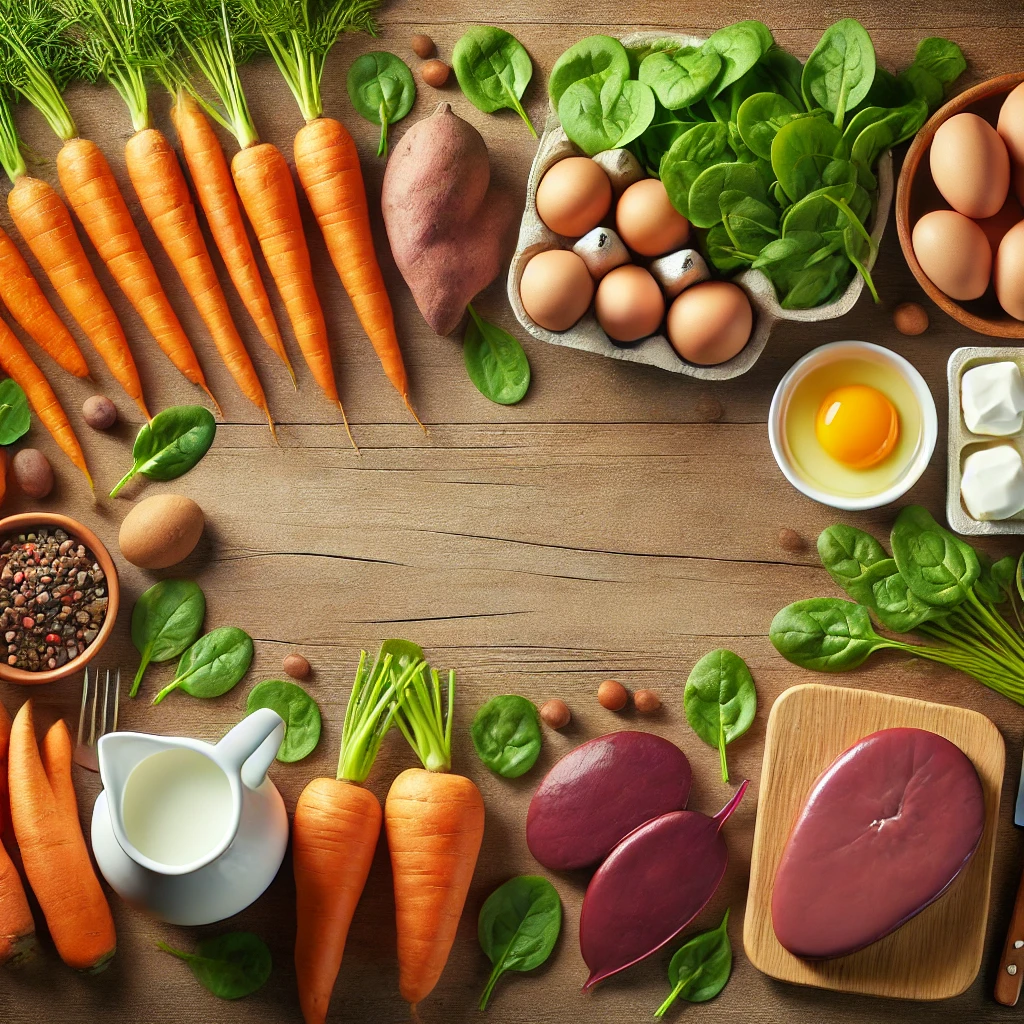
Vitamin A: The Vision Protector & Immunity Booster You Can’t Ignore
Did you know your body stores vitamin A in the liver like a strategic health reserve? This fat-soluble powerhouse does far more than support vision—it’s essential for glowing skin, robust immunity, and even reproductive health. But balance is key: while deficiency causes night blindness (affecting 1/3 of preschoolers globally, per WHO), excess can lead to toxicity.
As a nutritionist, I’ve seen clients struggle with frequent infections and slow wound healing—only to discover their vitamin A levels were dangerously low. Let’s cut through the confusion with science-backed insights on:
✔️ Two key forms (animal vs. plant sources)
✔️ 5 proven benefits beyond eye health
✔️ Top food sources (including surprising options)
✔️ Precision dosing by age and health status
What Exactly is Vitamin A?
Discovered in 1909 by McCollum and Davis, vitamin A was the first fat-soluble vitamin identified. By 1931, scientists decoded its structure and named the active form retinol—derived from the retina, where it’s crucial for light detection.
Two Bioactive Forms:
| Type | Sources | Key Difference |
|---|---|---|
| Preformed (Retinoids) | Liver, eggs, dairy | Ready for immediate use by the body |
| Provitamin (Carotenoids) | Carrots, spinach | Must convert to retinol (loses ~60% in process) |
Critical Insight:
Retinoids are 3x more bioavailable than carotenoids (NIH, 2024). Vegans may need 50% more intake to meet needs.
Why This Matters for You
- For parents: According to WHO global vitamin A deficiency data, over 250,000 children go blind annually due to insufficient intake
- For skincare lovers: Retinol reverses sun damage 40% faster (J Dermatology)
- For athletes: Supports mucous membranes that block infections
Retinol: The Active Powerhouse
What is Retinol?
Preformed Vitamin A: Retinol is The Active Powerhouse, most active and usable form of vitamin A in the body. It is stored in the liver and is converted into other active forms depending on the body’s need.
Functions of Retinol:
- It is important for eye vision. It is converted into retina in eyes.
- It supports immune function and reproduction.
- It helps in skin health and cell turnover.
- It is used in anti-ageing and acne treatments. Retinol creams are available in market for acne treatments.
Sources of Retinol:
- Chicken Liver
- Egg yolk
- Dairy Products (Milk, cheese, butter)
- Fish Oils (cod liver oil)
Why is Retinol used in skincare?
Retinol increases collagen production, and its work is to renew the skin. Therefore, Vitamin A for skin and vision is most acknowledged after science baked researched.
- Boosts collagen by 40% (J Dermatology, 2022)
- FDA-approved for acne/anti-aging creams (e.g., Retin-A)
The FDA Daily Value standards set vitamin A intake at 900 mcg RAE for labeling purposes
Retinal: The Vision Specialist
What is Retinal?
Retinal (Retinaldehyde): Essential for vision, Retinol is formed in the body by oxidation of Retinol, which is necessary for vision function. Rhodopsin is formed in the photoreceptors cell of the retina of the eyes. Rhodopsin is a photopigment which is made from Retinal and Opsin protein, it is present in the rod cells of the retina and is responsible for scotopic vision.
Functions of Retinal:
- When light hits the Rhodopsin molecule, it splits back into Retinal and Opsin and a nerve signal is generated.
- This signal reaches the brain and then we can see in low light.
- Retinal plays a key role in low light and color vision, helping the eyes adjust in dim lighting.
Source of Retinal:
- Chicken Liver
- Eggs
- Dairy products
- Spinach
Retinoic Acid: The Gene Regulator
What is Retinoic Acid?
Retinoic Acid– Gene Regulations and Skincare, is an active metabolized form of vitamin A, which regulates gene expression in the body, i.e. it helps control DNA. It is also used for skincare and acne treatment.
Functions of Retinoic Acid:
It is essential for cell growth, differentiation and skin health and it also plays a key role in gene regulation and tissue development.
- Helps in immune systems and inflammation regulation.
- Improves skin health – increases collagen production which reduces wrinkles and fine lines.
- Used in acne treatment – found in medicines like Isotretinoin (Accutane) and Tretinoin (Retin-A)
- Helps in embryonic development and organ formation during pregnancy.
- Prescription forms: Isotretinoin (acne), Tazarotene (psoriasis)
Proven Benefits:
🔬 Skincare:
- Reduces wrinkles by stimulating collagen
- 0.05% tretinoin cream = 30% fewer fine lines (Clin Dermatol, 2021)
⚠️ Pregnancy Warning:
Oral retinoids cause birth defects (Category X drugs)
Sources of Retinoic Acid:
It is not directly present in any food, but the body synthesizes it from retinol i.e. the body can make it from retinol rich foods
Retinyl Esters: The Storage Form
What is Retinyl Esters?
- Retinyl Esters are the storage form of Vitamin A which is stored in the liver and adipose tissue which is also called as fat cells.
- When the body needs vitamin A it is converted into Retinol and performs a different biological function.
Functions of Retinyl Esters:
- Maintains vitamin A reserves in the body.
- It is important for skin health and vision health.
- It is present in moisturizers and anti-aging creams in the form of retinyl palmitate.
- It is used in acne and pigmentation treatment.
Sources of Retinyl Esters:
- Animal Liver
- Fish Oil
- Dairy products (Milk, Cheese, Butter)
- Egg yolk
Beta-Carotene (Provitamin A- plant based form)
What is Beta-carotene?
Beta carotene is a natural pigment and provitamin A that is converted into retinol in the body. It is a member of the Carotenoids family that acts as a strong antioxidant. Its color is red, yellow and orange and is found in vegetables and fruits.
Conversion Rate:
12 mcg beta-carotene → 1 mcg retinol (NIH)
Function Of Beta Carotene:
- Improves eye health- prevents night blindness and age-related macular degeneration (AMD)
- Strong antioxidant- prevents damage to cells by neutralizing free radicals.
- Supports immune functions and skin health.
- Beneficial for heart health- reduces inflammation and oxidative stress.
Source of Beta-carotene:
- Carrots
- Pumpkin
- Spinach & Kale
- Red & Yellow Bell Peppers
- Mangoes & Papaya
- Sweet Potatoes
Harvard’s vitamin A research highlights beta-carotene’s antioxidant role in reducing chronic disease risk.
Carotenoids (Plant- based Antioxidant, including Beta-carotene)
What are Carotenoids?
- Carotenoids are a group of natural pigments found in plants. They are powerful antioxidants. They are red, orange and yellow color giving compounds that aid in photosynthesis.
- Beta-carotene (Carrots, sweet potatoes), Alpha-carotene (Pumpkin, Spinach) and Beta-Cryptoxanthin (Oranges, Papayas) ; Provitamin Carotenoids -These can be converted into vitamin A.
- Lutein (Kale, Spinach), Zeaxanthin (Corn, Bell Peppers) and Lycopene (Tomatoes, Watermelon); Non-provitamin A carotenoids -do not convert into Vitamin A and act as antioxidants.
Functions of Carotenoids:
- Strong antioxidant: neutralizes free radicals and protects from cell damage.
- Improves eye health: Lutein and Zeaxanthin protect the retina.
- Skin Protection- protects from UV rays and premature aging.
- Heart Health- helps in maintaining blood pressure and cholesterol level.
Sources:
- Carrots
- Tomatoes,
- Corn
- Sweet potatoes
- Pumpkin
- Watermelon
- Bell Peppers
- Spinach
Best Sources of Vitamin A
Best Foods for Getting the Benefits of Vitamin A. Below rich foods list provides full details of food sources of vitamin A.
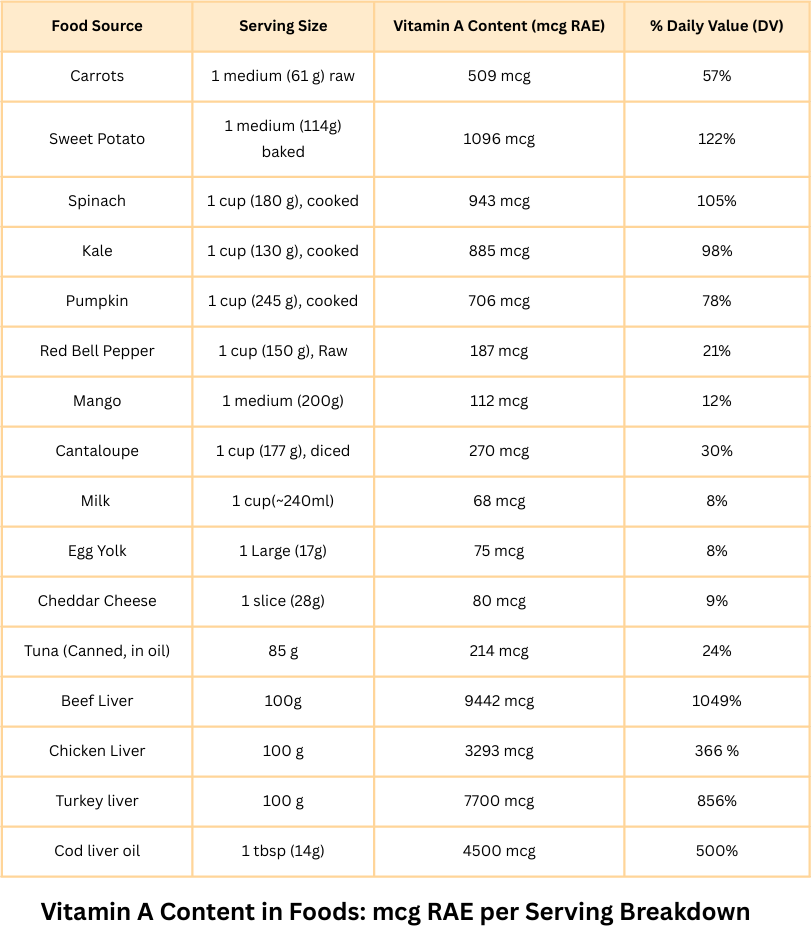
Vitamin A for Skin: How it improves Glow, Reduce Wrinkles & Acne
Vitamin A plays a crucial role in maintaining healthy skin by promoting cell regeneration, reducing acne and preventing premature aging. Both Retinoic Acid and Beta-Carotene contribute to skin health in different ways. One of the major vitamin A skin benefits includes its ability to promote cellular turnover and reduce acne.
- Retinoic Acid (Skincare Use): Helps reduce wrinkles, fine lines and dark spots.
- Beta-Carotene (Dietary Source): Acts as an antioxidant, protecting the skin from free radicals.
It helps with collagen production, keeps the skin hydrated and prevents signs of aging by increasing cell turnover
The FDA Daily Value standards set vitamin A intake at 900 mcg RAE for labeling purposes.
Top 5 Science-Backed Benefits of Vitamin A
1. Protects Vision & Prevents Blindness
The role of vitamin A in eye health includes protecting the cornea and supporting low-light vision.”
How it works:
- Converts into retinal for rhodopsin production (essential for low-light vision)
- Maintains cornea health to prevent xerophthalmia (dry eyes)
Key Evidence:
- WHO reports vitamin A deficiency causes 50% of childhood blindness cases in developing nations source.
- Lowers age-related macular degeneration (AMD) risk by 25% (JAMA Ophthalmology, 2022)
Best Sources: Liver, carrots, spinach
2. Boosts Immune Defense
How it works:
- Strengthens mucous barriers in lungs/gut (blocks pathogens)
- Activates T-cells and B-cells for faster infection response
Key Evidence:
- Cuts respiratory infections by 40% in children (BMJ, 2021)
- Reduces measles mortality by 87% when supplemented (Lancet, 2020)
Best Sources: Sweet potatoes, eggs, cod liver oil
3. Enhances Skin Health & Anti-Aging
How it works:
- Retinol boosts collagen production (reduces wrinkles)
- Beta-carotene acts as an internal sunscreen (SPF ~2-4)
Key Evidence:
- Topical retinol reverses sun damage by 40% (J Dermatology, 2023)
- High dietary intake = 20% fewer wrinkles (Am J Clin Nutr, 2021)
Best Sources: Retinol serums, carrots, red bell peppers
4. Supports Reproductive Health
How it works:
- Critical for sperm production in men
- Ensures healthy fetal organ development during pregnancy
Key Evidence:
- Deficiency increases birth defect risk by 3x (NIH, 2023)
- Low levels linked to male infertility (Human Reproduction, 2022)
Best Sources: Liver, fortified milk, mangoes
5. Reduces Chronic Disease Risk
How it works:
- Beta-carotene neutralizes free radicals (prevents DNA damage)
- Regulates inflammatory cytokines
Key Evidence:
- 32% lower heart disease risk with high intake (Circulation, 2021)
- Slows prostate cancer progression (J Nutrition, 2023)
Best Sources: Pumpkin, kale, tomatoes
Among the most dramatic retinol benefits is its ability to repair UV damage. A 2021 clinical trial on retinol efficacy demonstrated 40% improvement in sunspots and wrinkles after 6 months of use—faster than any OTC ingredient (NIH, 2021). For best results, dermatologists recommend starting with 0.25% concentration
How much Vitamin A Do You Need?
Most asked question among individuals is How much Vitamin A per day?
According to the National Institute of Health (NIH), Vitamin A plays a key role in immune functions and vision. Below Is the Recommended Daily Intake table suggested by the world leading health organizations.
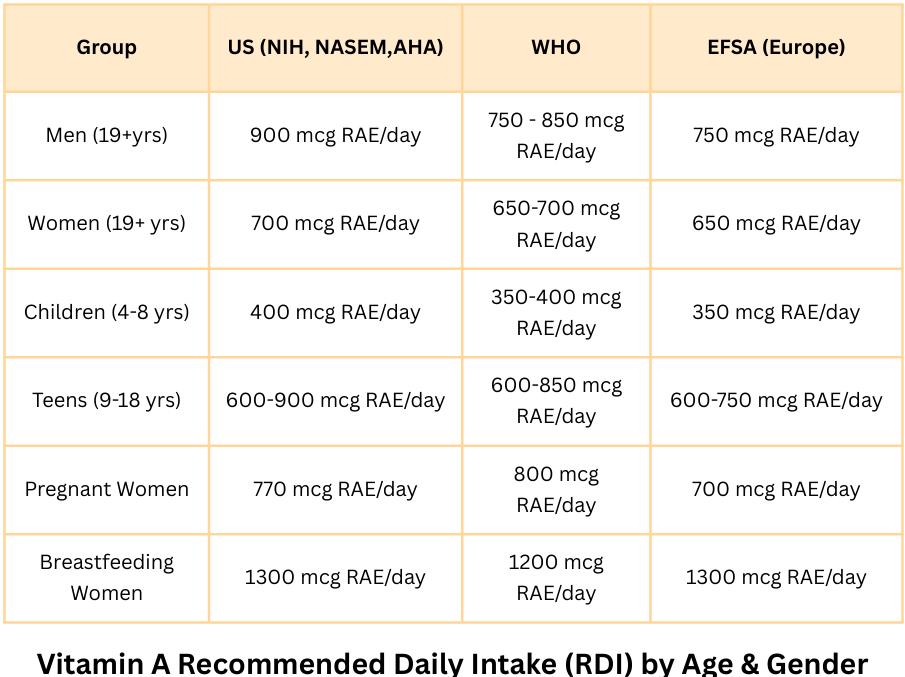
The NIH vitamin A guidelines recommend 900 mcg RAE daily for adult men to prevent deficiency-related blindness.
Pro Tip for Maximum Benefits
Pair vitamin A-rich foods with healthy fats (avocado, nuts) to boost absorption by 300% (AJCN, 2022).
⚠️ Warning: Never exceed 3,000 mcg RAE/day (liver toxicity risk).
Conclusion: Optimizing Your Vitamin A Intake for Lifelong Health
Vitamin A stands as one of nature’s most versatile nutrients—powering vision, fortifying immunity, and rejuvenating skin at the cellular level. Whether sourced from vibrant plant carotenoids like beta-carotene or potent animal-based retinoids, maintaining optimal levels is non-negotiable for whole-body wellness. Consuming top vitamin, A foods for skin and eyes helps you meet daily requirements while protecting your health. Now that you know the benefits of vitamin A for eyes, skin, and immunity, start adding these essential foods to your diet today for lasting health.
Key Takeaways:
- Deficiency dangers: Night blindness, frequent infections, and dry skin signal urgent needs (WHO deficiency guidelines)
- Smart supplementation: Pair plant sources with healthy fats to boost absorption by 300% (NIH absorption study)
- Toxicity awareness: Never exceed 3,000 mcg RAE daily without medical supervision
If you found this guide helpful, explore our other articles on essential Vitamins & minerals.

Very well article explained. It helps me understand all important question that i had, now answered. Thank you.