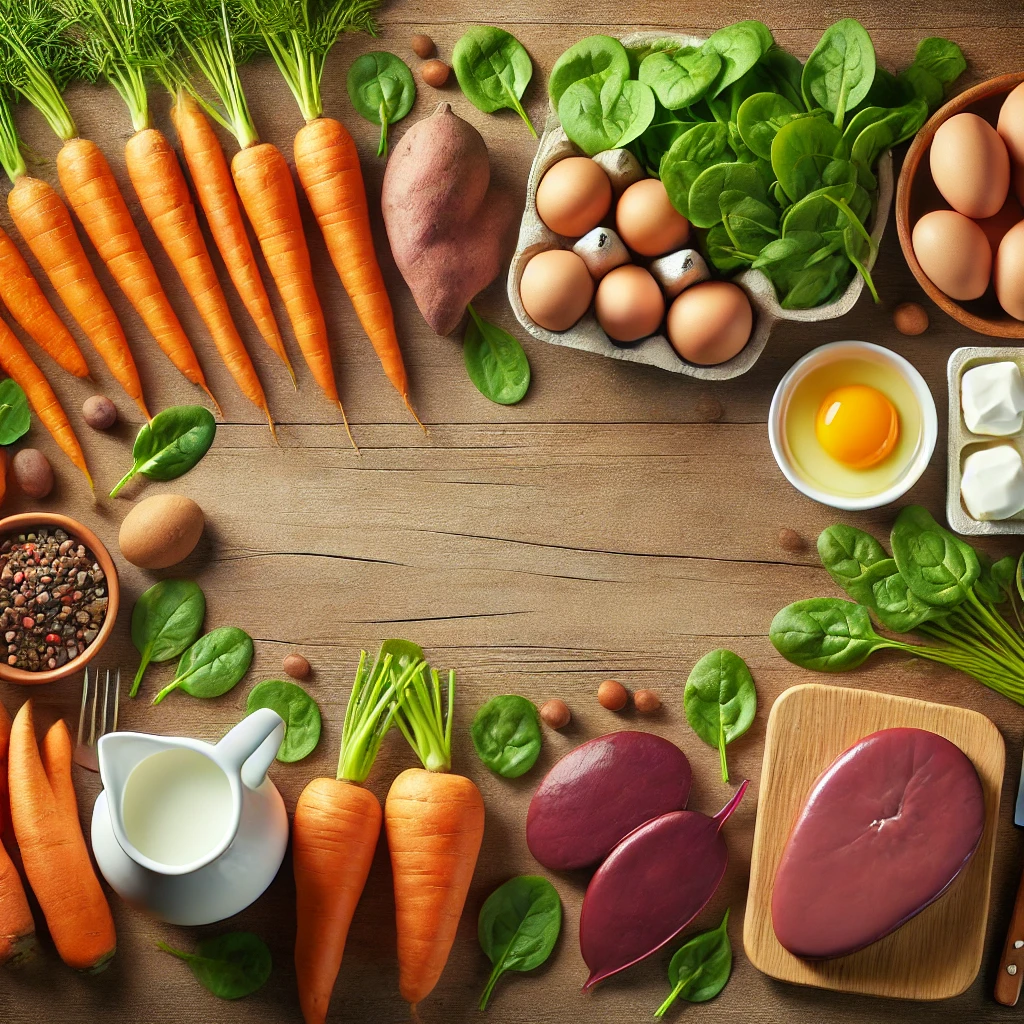
Why Your Bones Crave Calcium (And How to Get Enough)
Think of calcium as your skeleton’s construction crew—it’s the most abundant mineral in your body, with 99% working around the clock to keep your bones strong and teeth resilient. But here’s what most people don’t realize: that leftover 1% is a multitasking marvel, keeping your heart beating steadily, muscles moving smoothly, and blood clotting properly when you get a cut. Strong bones need more than just calcium. “Did you know? Without key co-factors like Vitamin K2, calcium can deposit in arteries instead of bones, increasing cardiovascular risks (NIH). Let’s dive into the 5 Powerful Calcium Benefits for Bone Health + Top Food Sources & Deficiency Dangers
The Calcium Paradox
Even though we’ve known about calcium’s importance for decades, nearly 1 in 3 adults falls short on their daily needs (NIH, 2024). This silent deficit can lead to:
-
Bones becoming brittle (like chalk instead of steel)
-
Fractures from minor falls (especially after 50)
-
Early osteoporosis (bone loss often starts unnoticed in your 30s)
1.How Calcium Builds Unbreakable Bones (And Keeps Them Strong for Life)
Your bones aren’t just static scaffolding—they’re living, dynamic tissue that constantly rebuilds itself. Here’s how calcium acts as both the bricks and mortar of your skeletal system, top 5 calcium benefits you might not know:
1. Childhood & Teens: The “Bone Bank” Years
Why Growing Bodies Need Extra Calcium
-
Your bones absorb calcium like a sponge during growth spurts
-
By age 18 (girls) or 20 (boys), you’ve built 90% of your lifetime bone mass (NIH, 2024)
-
Think of it like compound interest: The more calcium you “deposit” early, the stronger your bones stay later
Real-Life Impact:
-
Teens who get 1,300 mg/day (3-4 servings of dairy/fortified foods) have:
-
12% denser bones at age 30
-
40% lower fracture risk after 50 (Journal of Pediatrics, 2023)
-
2. Adulthood: The Silent Calcium Drain
How Bones Slowly Lose Density (Without You Noticing)
After 30, bone breakdown outpaces formation—leading to:
-
Postmenopausal women losing 2% bone mass yearly (due to estrogen drop)
-
Men over 50 losing 1% annually
Shocking Stat:
1 in 3 women will break a bone due to osteoporosis—more than heart attacks and breast cancer combined (International Osteoporosis Foundation) Shockingly, 1 in 3 women will suffer a bone break due to osteoporosis—outpacing heart attacks and breast cancer (IOF Statistics).
How Calcium Fights Back:
-
Acts as a “bone paycheck”—replenishing what’s lost daily
-
The New England Journal of Medicine reports that calcium and vitamin D together can slash age-related bone loss by up to 50% (NEJM Study)
3. The Bone Remodeling Miracle
Your Skeleton’s Secret Construction Crew
Every decade, your body completely rebuilds your skeleton through:
| Team | Role | Calcium’s Job |
|---|---|---|
| Osteoblasts 🦴 | Bone builders | Provides raw material |
| Osteoclasts ⚒️ | Bone recyclers | Prevents excessive breakdown |
What Goes Wrong Without Calcium?
-
Your body steals calcium from bones to maintain blood levels
-
Over time, bones develop “Swiss cheese” holes (osteoporosis)
Pro Tip:
Weight-bearing exercise (walking, dancing) triples calcium’s bone-building effects!
4. Who’s Most at Risk?
☑️ Teens (only 15% meet calcium needs during critical growth years)
☑️ Postmenopausal women (estrogen drop = calcium absorption plummets)
☑️ Lactose-intolerant adults (if not replacing dairy with fortified foods)
Defense Plan:
-
Under 50? Aim for 1,000 mg/day
-
Over 50/Women? 1,200 mg/day + weight training
5. Beyond Supplements: Smart Calcium Boosts
Better-Absorbed Sources
| Food | Calcium (mg) | Pro Hack |
|---|---|---|
| Canned salmon | 325 (per 3 oz) | Mash bones into patties |
| Bok choy | 160 (per cup) | Stir-fry with sesame oil |
| Fortified OJ | 350 (per cup) | Morning vitamin C + calcium combo |
Avoid These Calcium Thieves:
-
Excess salt (each 1,000 mg sodium loses 40 mg calcium)
-
Soda (phosphoric acid leaches calcium)
Key Takeaways
✅ Childhood/teens = Critical bone-building window
✅ After 30 = Calcium fights silent bone loss
✅ Remodeling never stops – feed your bones daily
✅ Food > pills (prioritize calcium-rich meals)
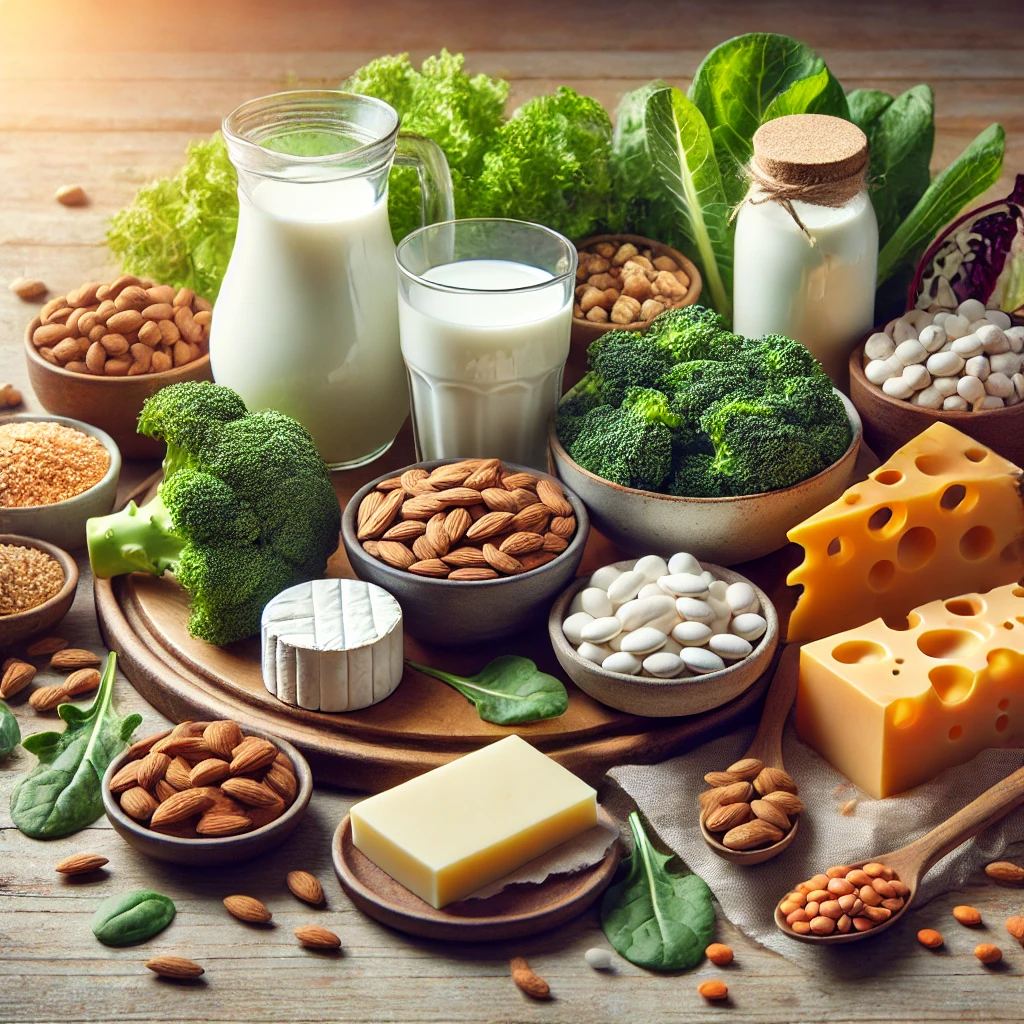
Calcium-rich foods such as dairy, leafy greens, nuts, and fortified drinks help maintain strong bones and prevent osteoporosis.
2.Best Calcium-Rich Foods for Strong Bones (And Why They Beat Supplements)
Getting enough calcium isn’t just about hitting a number—it’s about giving your body the right building blocks for strong bones and making sure that calcium ends up where it belongs (your skeleton, not your arteries). While supplements can help, real food offers better absorption, along with other bone-boosting nutrients like magnesium, vitamin K2, and protein.
Here are the top calcium-rich foods to add to your diet:
1. Dairy: The Classic Bone Builder
-
Greek yogurt (1 cup) → 250–300 mg (~25% DV)
-
Milk (1 cup, whole or skim) → 300 mg (~30% DV)
-
Parmesan cheese (1 oz) → 330 mg (~33% DV)
Why it works: Dairy contains lactose and casein, which enhance calcium absorption. Fermented options (yogurt, kefir) also support gut health—key for nutrient uptake.
2. Leafy Greens: The Unsung Heroes
-
Collard greens (1 cup cooked) → 266 mg (~25% DV)
-
Kale (1 cup cooked) → 180 mg (~15% DV)
-
Bok choy (1 cup raw) → 74 mg (~7% DV)
Bonus: These greens are rich in vitamin K1, which the body converts to K2—a critical nutrient for directing calcium to bones.
3. Fish with Edible Bones: A Double Win
-
Canned sardines (3 oz) → 325 mg (~30% DV) + vitamin D
-
Canned salmon (3 oz) → 180 mg (~15% DV) + omega-3s
Pro tip: Mash the bones into patties or salads—they’re soft, packed with calcium, and unnoticeable!
4. Seeds & Nuts: Tiny but Mighty
-
Chia seeds (1 oz) → 179 mg (~15% DV)
-
Almonds (1 oz) → 76 mg (~8% DV)
-
Sesame seeds (1 tbsp) → 88 mg (~9% DV)
Fun fact: Soaking or roasting nuts/seeds reduces phytic acid, making their calcium more bioavailable.
5. Fortified Foods: Helpful Boosters
-
Tofu (½ cup, calcium-set) → 250–800 mg (varies by brand)
-
Fortified plant milks (1 cup) → 300 mg (~30% DV)
Note: Check labels—calcium sulfate or carbonate in tofu/plant milks ensures absorption rivaling dairy.
Why Food > Supplements
-
Better absorption: The matrix of nutrients in food (e.g., vitamin D in fatty fish, magnesium in greens) enhances calcium uptake.
-
Safety net: Excess calcium from supplements may harden arteries if vitamin K2 is lacking (NIH study), while food self-regulates.
-
Bone synergy: Real foods provide collagen-building protein, phosphorus, and trace minerals that pills can’t match.
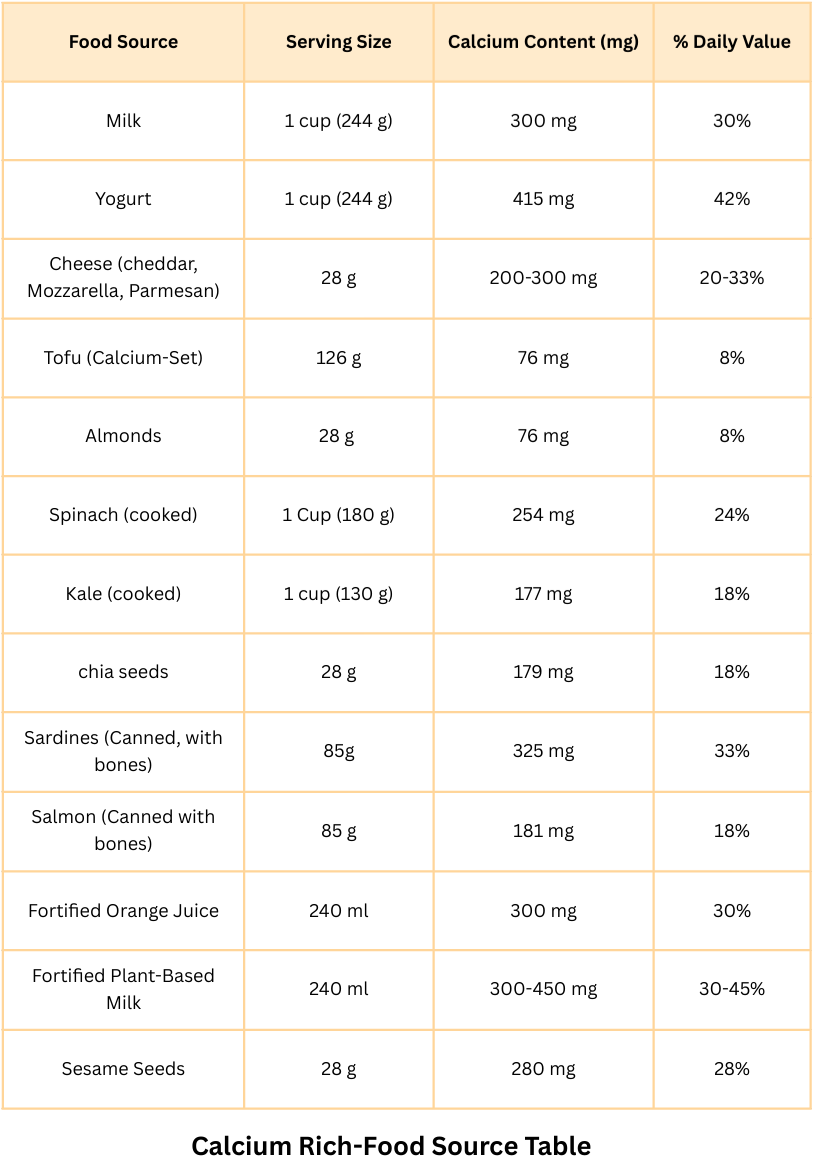
Tip: Pair calcium-rich foods with Vitamin D (e.g., sunlight, eggs, fatty fish) for better absorption.
3. How Much Calcium Do We Need Daily?
Calcium isn’t a one-size-fits-all nutrient—your needs shift dramatically over a lifetime. Too little weakens bones; too much (especially from supplements) may harm your heart. Here’s a clear breakdown by age and life stage, plus what science says about optimal absorption
Key Science-Backed Insights
-
Teens & Seniors Are Priority Groups
-
Teens need more calcium than toddlers or adults because their skeletons are expanding rapidly.
-
After 50, gut absorption drops ~30%—so seniors need higher intake despite eating less.
-
-
More ≠ Better
-
Exceeding 2,500 mg/day (from supplements) may cause kidney stones or arterial calcification (NIH warning).
-
Food-first approach: While calcium benefits bone health, supplements aren’t always the answer the body regulates calcium from foods better than megadoses in pills.
-
-
Absorption Matters More Than the Number
-
Only 30–40% of dietary calcium is absorbed. Boost uptake by:
-
Pairing with vitamin D (sunlight, fatty fish).
-
Spreading intake (500 mg/meal max—the gut can’t handle large doses at once).
-
Avoiding iron-rich meals with calcium (they compete for absorption).
-
-
What 1,000 mg of Calcium Looks Like in Food
Here’s a realistic day’s menu for an adult:
-
Breakfast: Greek yogurt (300 mg) + handful almonds (75 mg)
-
Lunch: Kale salad (100 mg) + canned salmon (180 mg)
-
Dinner: Tofu stir-fry (200 mg) + bok choy (150 mg)
-
Snack: Chia pudding (150 mg)
Total: ~1,155 mg — No supplements needed!
Bottom Line:
Your calcium needs are as unique as your life stage. Focus on consistent, food-based intake and synergies (vitamin D/K2, exercise) rather than obsessing over numbers.
The Recommended Daily Intake (RDI) of calcium varies by age & gender:
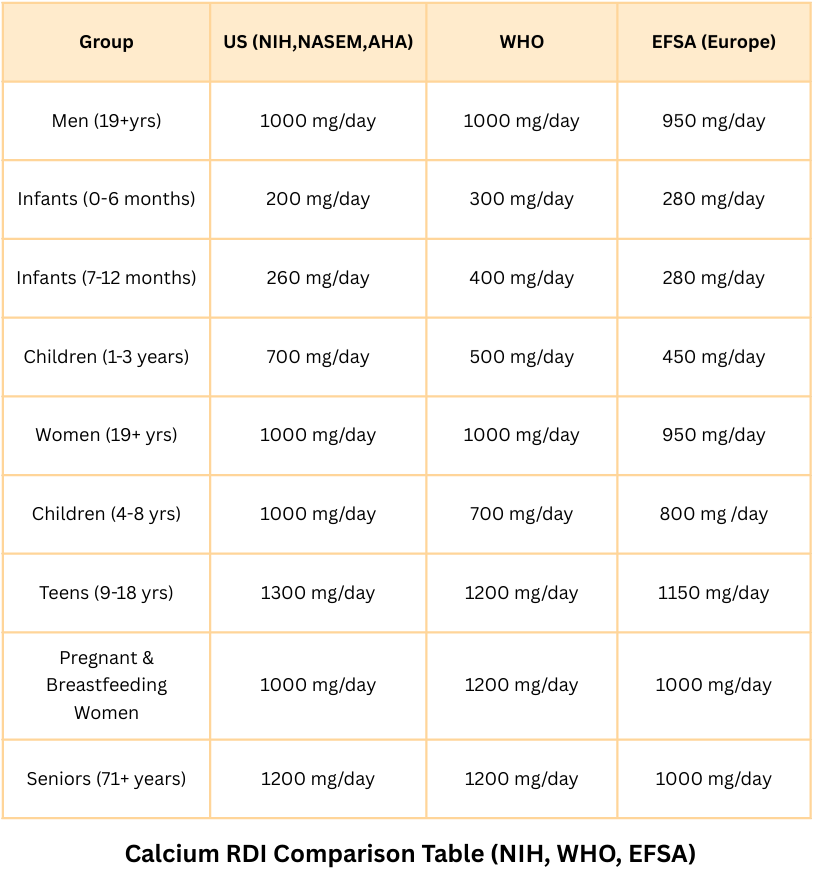
Did You Know? Without Vitamin D & Vitamin K, calcium does not reach bones properly and instead gets deposited in arteries or kidneys, increasing the risk of kidney stones.
4. Do You Need a Calcium Supplement? Here’s the Truth
Calcium from food is always the best option—but let’s be real: life (and biology) doesn’t always cooperate. If you fall into one of these categories, a supplement might be necessary—but the type you choose matters just as much as taking it.
Who Really Needs Calcium Supplements?
1. You Don’t Get Enough from Food
-
Reality check: Most adults need 1,000–1,200 mg/day, but surveys show many get only 500–700 mg.
-
Fix it first: Calcium supplements work faster, but foods provide better absorption over time. Try adding more dairy, leafy greens, or fortified foods before jumping to pills.
2. You’re Lactose Intolerant or Vegan
While dairy offers natural calcium benefits, supplements help fill gaps for vegans.
-
Problem: Cutting out dairy removes the easiest calcium source.
-
Smart swap: If fortified plant milks, tofu, and almonds still leave you short, supplements can fill gaps.
3. You Have Osteoporosis or High Fracture Risk
-
Urgent need: If you’ve been diagnosed or have a family history, food alone may not be enough.
-
Critical combo: Supplements should always be paired with vitamin D3 + K2 to ensure calcium reaches bones, not arteries.
4. You Have Digestive Disorders (Crohn’s, Celiac, IBS)
-
Why? Gut damage = poor nutrient absorption. Even if you eat enough, your body may not absorb it.
-
Solution: A highly bioavailable form (like citrate) + a gut-healing protocol.
Best Calcium Supplements: A Science-Backed Guide
Not all calcium supplements work the same. Here’s how to pick the right one:
| Type | Best For | Key Details |
|---|---|---|
| Calcium Carbonate | Budget-friendly option | – Pros: Cheaper, high elemental calcium (40%). – Cons: Needs stomach acid—take with meals. – Avoid if: You’re on acid blockers (PPIs) or have low stomach acid. |
| Calcium Citrate | Older adults or sensitive guts | – Pros: Absorbs well even without food, gentler on digestion. – Cons: Less elemental calcium (21%), so you’ll need more pills. – Ideal for: People with IBS, Crohn’s, or taking antacids. |
| Calcium Hydroxyapatite | Natural bone-like form | – Pros: Mimics bone structure; some studies suggest better absorption. – Cons: Expensive, harder to find. |
| Algae Calcium | Vegan-friendly, whole-food source | – Pros: Includes trace minerals like magnesium. – Cons: Lower dose per pill; may contain heavy metals (choose reputable brands). |
6 Golden Rules for Safe Supplementation (Medical-Approved)
- Never Take More Than 500 mg at Once
Your gut can’t absorb large doses efficiently. Split your intake (e.g., 500 mg AM + PM). - Always Pair with D3 + K2
Vitamin D3 ensures absorption; K2 (as MK-7) directs calcium to bones. Without them, you risk soft-tissue calcification. - Avoid Iron & Zinc at the Same Time
Calcium blocks their absorption. Space them by 2+ hours - Timing Matters
The Mayo Clinic emphasizes taking calcium supplements like calcium carbonate with meals and calcium citrate any time for optimal absorption. - Watch for Interactions
“Calcium can interfere with certain medications like antibiotics and thyroid drugs” (Mayo Clinic, 2023). Always space them 2-4 hours apart. - More Isn’t Better
“Exceeding 2,000-2,500 mg daily from supplements may increase health risks” (Mayo Clinic, 2023). Stick to your RDI unless directed otherwise.
When to Skip Supplements (Even If You Think You Need Them)
-
If your diet is already rich in calcium (e.g., dairy + greens daily).
-
If you have kidney disease (excess calcium can be dangerous).
-
If you’re taking high-dose iron or thyroid meds (calcium interferes).
FAQs
Q 1: What Happens if You Don’t Get Enough Calcium?
A: Deficiency Symptoms:
- Weak bones, higher fracture risk
- Muscle cramps & spasms
- Tooth decay
WHO warns that chronic calcium deficiency increases the risk of osteoporosis by 30%.
Q 2: Does Too Much Calcium Cause Health Problems?
A: Yes! Excess calcium (>2000 mg/day) may lead to:
- Kidney stones
- Arterial calcification
- Digestive issues (bloating, constipation)
Fact: The NIH recommends staying below 2000 mg/day for optimal health.
Q 3: What’s the Best Calcium Supplement?
A:
- Calcium Carbonate – Best with food
- Calcium Citrate – Best for low stomach acid
- Hydroxyapatite – Closest to natural bone calcium
Q 4: Can Calcium Be Absorbed Without Vitamin D?
A: No! Vitamin D enhances calcium absorption in the intestines. Without it, only 10-15% of dietary calcium is absorbed.
Tip: Get sunlight exposure or take Vitamin D supplements to ensure proper calcium absorption.
Are Dairy-Free Sources of Calcium Effective?
Yes! to maximize calcium benefits, pair leafy greens with nuts, seeds, tofu, and fortified plant milks provide excellent calcium.
However, bioavailability is lower than dairy, so pair them with Vitamin D & K2 for better absorption.
Q 5: Can calcium reverse osteoporosis?
A: It slows bone loss but can’t fully reverse it. Pair with weight-bearing exercise + Vitamin K2.
Q 6: Best time to take calcium?
A: Night—matches bone’s natural remodeling cycle.
Q 7: Why do my calcium pills cause bloating?
A: Switch to citrate form and avoid carbonate with meals.