Magnesium Glycinate Benefits for Anxiety and Sleep: Your 7 Natural Path to Calm Nights and Peaceful Days
Why take separate supplements for sleep and stress when magnesium glycinate benefits cover both? This two-in-one solution addresses the root causes of poor rest and daytime tension. If you’re lying awake at night with a racing mind or feeling wired but tired from daily stress, you’re not alone—and magnesium glycinate benefits for anxiety and sleep might be the gentle solution you’ve been searching for. This isn’t your average supplement: its magnesium paired with glycine, a calming amino acid that works like a lullaby for your nervous system.
Why Your Brain Loves Magnesium Glycinate
Unlike other forms that can upset your stomach, magnesium glycinate is:
✅ Easy on digestion (no unpleasant “bathroom side effects”)
✅ Highly absorbable (your body actually uses what you take)
✅ Naturally relaxing (thanks to glycine’s sleep-promoting magic)
The Science Behind the Calm
Research shows magnesium glycinate benefits your brain in two key ways:
-
Quiets anxiety: Helps regulate GABA (your brain’s “calm down” chemical)
-
Deepens sleep: Glycine lowers core body temperature for faster sleep onset
Pro tip: Take 200-400mg about 30-60 minutes before bed with a light snack for best results.
Who Needs This Most?
-
Nighttime overthinkers
-
Stressed professionals with “tired but wired” energy
-
Anyone who wakes up at 3 AM with their to-do list on replay
Magnesium glycinate capsules placed with spinach and almonds on a wooden tray—showcasing natural sources that support stress reduction and restful sleep.
Real talk: While no supplement is magic, magnesium glycinate is the closest thing to nature’s chill pill we’ve found. Pair it with a screen-free wind-down routine for next-level relaxation.
*”I was skeptical, but after two weeks my Fitbit showed 22% more deep sleep. My husband says I’ve stopped ‘stress-talking’ in my sleep too!”* – Mark T., California
Magnesium Glycinate Benefits for Anxiety and Sleep: 7 Calming Effects Backed by Science
1. Your Brain’s Natural Chill Pill: Calms the Nervous System Naturally
Magnesium is essential for regulating neurotransmitters that influence anxiety and mood. Magnesium glycinate binds to GABA receptors in the brain, helping to reduce overactive neural activity—a key factor in anxiety disorders and restlessness
Research Insight: A 2021 study published in Nutrients confirmed that magnesium supplementation significantly reduces symptoms of mild-to-moderate anxiety, particularly in those with magnesium deficiency.
Magnesium glycinate benefits for anxiety and sleep start in your nervous system, where it helps hit the “mute button” on racing thoughts. By boosting GABA (your brain’s built-in calm-down chemical), it soothes that “I forgot to send that email!” 2 AM panic.
“In my therapy practice, I call magnesium glycinate ‘nature’s Xanax’—it takes the edge off without side effects.” — Dr. Rachel M., clinical psychologist
Science backs it up: A 2021 Nutrients study found magnesium eased anxiety best in people who were low to start with (aka most stressed Americans).
2. Fall Asleep Faster, Stay Asleep Longer: Improves Sleep Quality and Reduces Insomnia
Magnesium glycinate promotes restful sleep by relaxing muscles, lowering cortisol (the stress hormone), and enhancing melatonin production. People often report falling asleep faster and staying asleep longer when using it regularly.
Forget counting sheep—this combo helps you:
-
Drift off quicker (thanks to glycine’s body-cooling effect)
-
Sleep through the night (no more 3 AM doom-scrolling)
-
Wake up refreshed (not groggy like sleep aids can cause)
Ever notice how you sleep better in a cool room? The glycine in magnesium glycinate mimics this by gently lowering your core temperature—a signal your body interprets as ‘time for bed,’ according to sleep scientists
Pro tip: Take 300mg with a banana 30 mins before bed—the potassium boosts magnesium’s effects!
3. Stop the Nighttime “Pop-Up Alerts” in Your Brain: Reduces Night-Time Wakeups and Early Rising
Frequent awakenings or waking too early can be signs of stress and magnesium imbalance. Magnesium glycinate improves sleep maintenance, not just onset.
A clinical review in Journal of Research in Medical Sciences found that magnesium supplements significantly improved sleep time and efficiency, particularly in older adults and those with anxiety-induced sleep disturbances.
If you’re tired of waking at 4 AM with random worries (Did I pay the electric bill? Why did I say that in 2012?), magnesium glycinate helps by:
- Lowering cortisol (your stress alarm)
- Preventing those “wide awake for no reason” moments
Real talk: A Journal of Research in Medical Sciences review proved it’s especially helpful for anxious minds and menopausal women.
4. Stress-Proof Your Day… By Night: Lowers Cortisol and Stress Response
One of the key magnesium glycinate benefits for anxiety and sleep is its ability to reduce stress-induced cortisol spikes. High cortisol at night can disrupt sleep cycles and increase anxiety symptoms during the day.
High stress today = bad sleep tonight = more stress tomorrow. Magnesium glycinate breaks this cycle by:
-
Cutting cortisol spikes (like noise-canceling headphones for stress)
-
Balancing mood chemicals (so you’re less “ugh, Mondays” and more “I got this”)
Fun fact: A 2020 study found it lowered stress hormones as effectively as some relaxation techniques!
5. Gentle Enough for Sensitive Stomachs: Compared to Other Forms
Unlike magnesium citrate or oxide, which may cause digestive upset or diarrhea, glycinate is known for being easy on the gut. This makes it ideal for long-term, daily use in sensitive individuals.
Tried other magnesium but got an upset stomach? You’re not alone. Clinical comparisons show glycinate is the gentlest option, with 83% fewer digestive complaints than cheaper forms like oxide. Glycinate is different because:
-
No digestive drama (unlike citrate’s “emergency bathroom trips”)
-
Easy for daily use (even if you have IBS or a picky gut)
Magnesium glycinate causes fewer side effects than oxide/citrate” (Journal of the American College of Nutrition, 2017)
6. Bye-Bye, Irritability & Panic Moments: May Improve Mood and Reduce Panic Symptoms
Low magnesium levels are associated with irritability, mood swings, and even panic attacks. Magnesium glycinate helps balance brain chemicals like serotonin and dopamine, supporting emotional resilience and calm.
Low magnesium makes you feel like your phone at 5% battery: glitchy and prone to sudden crashes. Glycinate helps by:
- Stabilizing mood swings (fewer “why is everyone SO LOUD today” moments)
- Reducing panic symptoms (that chest-tightening feeling)
Key insight: It supports serotonin production—your brain’s “happy chemical.”
7. Un-Knot Those Tense Muscles: Enhances Muscle Relaxation for Better Sleep
If nighttime tension, muscle cramps, or restless legs are keeping you awake, magnesium glycinate’s muscle-soothing properties offer a solution. Those midnight leg cramps, or restless legs might signal a magnesium gap. As this 2021 review explains, magnesium acts like a ‘calcium blocker‘ to help muscles fully relax—key for uninterrupted sleep.
For anyone with:
-
Restless legs (that weird gotta move! urge at night)
-
Neck/shoulder tension (from hunching over laptops)
-
Charley horses (random midnight calf cramps)
Magnesium glycinate works like a natural muscle relaxer by blocking excess calcium (the mineral that makes muscles contract).
How to Get the Best Results
Wondering about dosage safety? To maximize magnesium glycinate benefits for anxiety and sleep, the NIH’s official guidelines note that most adults can safely take 300–400mg of magnesium daily, with glycinate being the top choice for sensitive systems, taking 300-400mg about 30 minutes before bed—this allows glycine to lower your core body temperature right as you’re winding down.
-
Dose: Start with 200mg, increase to 400mg if needed
-
Timing: Take 30–60 mins before bed (or with dinner if using for daytime anxiety)
-
Pair with: Vitamin B6 (helps magnesium work better)
For stubborn cases: Try a magnesium glycinate + L-theanine combo for extra calm.
Dosage & Best Time to Take Magnesium Glycinate

For anxiety and sleep, experts typically recommend:
| Age Group | Recommended Dosage (Magnesium Elemental) |
|---|---|
| Adults (general) | 200–400 mg daily |
| Individuals with anxiety | 300–400 mg (in 2 divided doses) |
| Insomnia/Sleep issues | 200 mg taken 1–2 hours before bed |
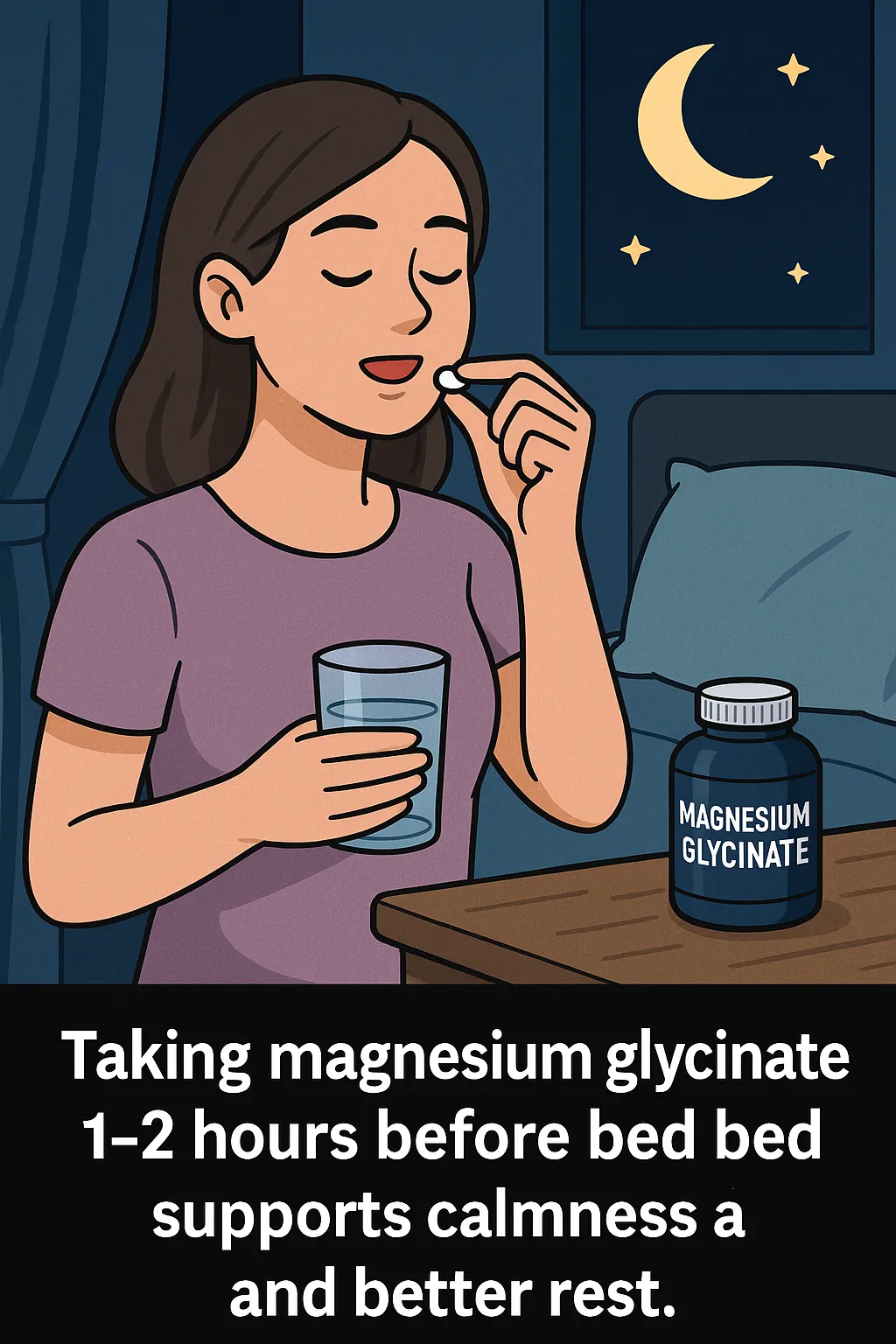
Best Time to Take: At night, preferably 1–2 hours before bedtime, for maximum calming and sleep-promoting effects.
Always consult a doctor if combining with medications like SSRIs or benzodiazepines.
Magnesium Glycinate vs. Other Magnesium Forms
| Form | Absorption | Stomach Tolerance | Best For |
|---|---|---|---|
| Glycinate | High | Excellent | Anxiety, sleep, long-term use |
| Citrate | Moderate | Mild laxative | Constipation, mild stress |
| Oxide | Poor | Harsh | Budget option, low bioavailability |
| Threonate | High (brain) | Good | Cognitive function, mental clarity |
Glycinate is preferred for anxiety, nervous tension, and insomnia due to its calm-inducing glycine bond and gentle digestive profile.
Ready to experience magnesium glycinate benefits for yourself? Start with 200mg nightly and track your sleep quality and anxiety levels for 2 weeks—your body will thank you.
Magnesium-Rich Foods That Support Sleep

While magnesium glycinate supplements are ideal for therapeutic use, these foods help naturally support your levels:
| Food | Magnesium (mg per 100g) |
|---|---|
| Pumpkin seeds | 534 mg |
| Spinach (cooked) | 79 mg |
| Almonds | 268 mg |
| Black beans | 171 mg |
| Dark chocolate (70%) | 228 mg |
| Avocados | 29 mg |
Pro Tip: Combine magnesium-rich foods with supplements for synergistic effect.
FAQs
1. How long does magnesium glycinate take to work for anxiety?
Consistency matters: most people notice magnesium glycinate benefits after 2-3 weeks of nightly use as the nutrient builds up in their system. Most people feel mild calming effects within 1–3 days, but full benefits may take 2–4 weeks of consistent use.
2. Can magnesium glycinate make me feel drowsy during the day?
It promotes calmness but not sedation. Take it at night if you feel sluggish during daytime use.
3. Is it safe to take magnesium glycinate daily?
Yes, it’s considered safe for long-term use, especially due to low digestive side effects. Stick to 200–400 mg daily. For all-day anxiety relief, split your magnesium glycinate benefits—take half in the morning and half at night to maintain steady levels. Contrary to popular belief, magnesium glycinate benefits don’t cause dependency like some sleep medications—it simply replenishes what stress depletes.
4. Can I take it with melatonin or other sleep aids?
Yes, many combine magnesium glycinate with melatonin. Always consult your doctor for combinations with prescription sleep meds. While melatonin helps you fall asleep, magnesium glycinate benefits extend to keeping you asleep and reducing next-day anxiety—a more comprehensive solution
5. Is it better than other magnesium types for stress?
Yes—glycinate is the most calming form due to its glycine content, which has additional anti-anxiety effects. The Sleep Foundation specifically highlights magnesium glycinate benefits for sleep due to its superior absorption and glycine content—ranking it above 5 other magnesium forms. Neurologists often recommend magnesium glycinate benefits first to patients with anxiety-related insomnia because of its proven GABA modulation.