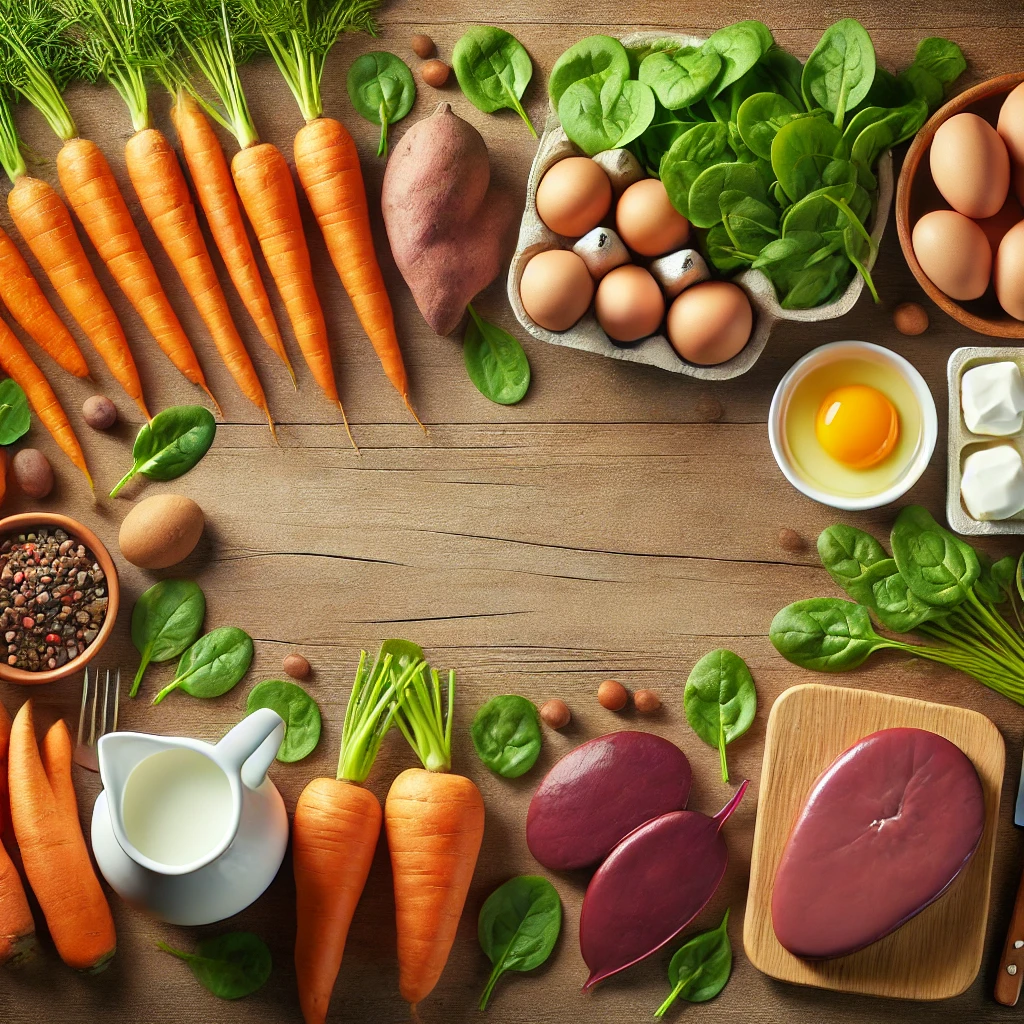
Selenium Benefits: Why This Mighty Mineral Matter More Than You Think
Selenium benefits unleashed: 9 unexpected ways this mighty mineral transforms your health from boosting immunity and thyroid function to fighting oxidative stress, this powerhouse nutrient works silently but profoundly to enhance your well-being. It benefits in more ways than most people do realize.
While it may not be as famous as iron or calcium, this powerful trace mineral plays a crucial role in your body’s daily function. From supporting thyroid health and strengthening your immune system to protecting your heart and fighting oxidative stress, selenium is essential. It’s involved in over 25 key enzymes and proteins (called Selenoproteins) that assist with everything from DNA repair to inflammation control. Though your body only needs a small amount, getting enough selenium can make a huge difference in how you feel and function each day.
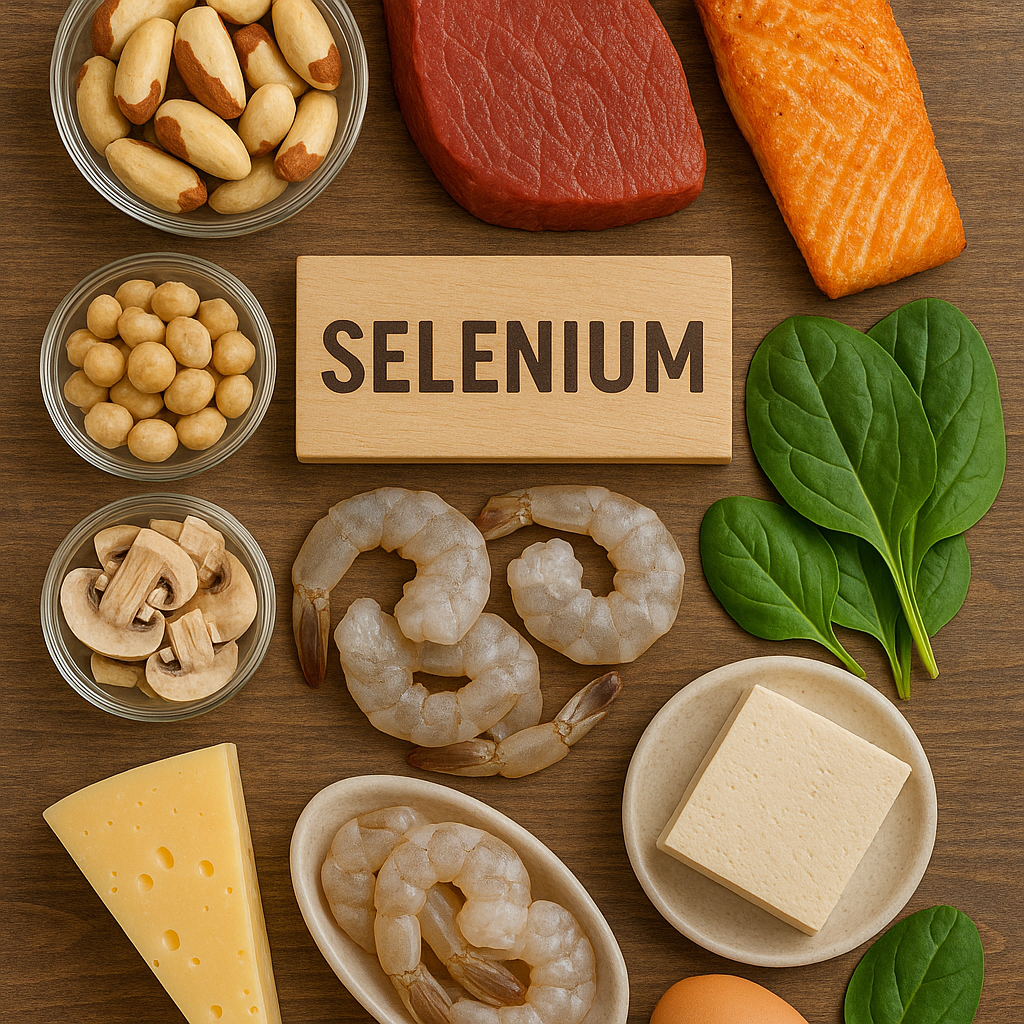
Selenium is like your body’s Swiss army knife—a trace mineral with nine distinct superpowers. Found in soil and absorbed by plants, it becomes a critical defender against modern health threats:
- Fights 21st-century toxins (air pollution, processed foods)
- Works 24/7 in your thyroid, brain, and immune cells
- So rare that 1 billion people are deficient (WHO estimate)
Killer stat: People with optimal selenium levels have 40% lower risks of dying from cancer and heart disease (Lancet, 2018).
The 9 Uncommon Selenium Benefits
1. Shields Your Brain from Heavy Metals (Like a Cellular Bouncer)
What’s happening:
Imagine mercury from fish or lead from old pipes as rowdy troublemakers in your brain’s nightclub. Selenium acts like the ultimate bouncer—it grabs these toxic metals in a “bear hug” (forms selenite complexes) and escorts them out through your urine.
Real-life impact:
- Helps reverse brain fog from heavy metal exposure
- Protects kids from lead-induced learning delays
- May lower risk of Parkinson’s/Alzheimer’s (heavy metals contribute to both)
Pro tip: Pair Brazil nuts with cilantro in a detox smoothie—the cilantro’s compounds help selenium mop up metals like a sponge.
(Source: Environmental Health Perspectives, 2016)
2. Extends Telomeres (Your Biological “Shoe Lace Tips”)
The analogy:
Telomeres are like the plastic tips on shoelaces—they keep your DNA from fraying with age. Every time cells divide, these tips shorten. Selenium slows this erosion by boosting telomerase activity (your body’s “lace-tip repair kit”).
Why you care:
- Longer telomeres = younger-acting cells
- Linked to living 5+ extra healthy years
- Helps prevent age-related diseases
Study spotlight: Adults taking selenium had telomeres equivalent to people 5 years younger (Journal of Nutrition, 2020).
3. Supercharges Vaccines (Your Immune System’s Cheerleader)
Behind the scenes:
When you get a flu shot or COVID vaccine, selenium is like the enthusiastic coach that makes your immune team practice harder. Low selenium = lazy players skipping drills.
Striking stats:
- People with normal selenium levels developed 50% more antibodies after hepatitis B vaccines
- Elderly with low selenium had weaker response to pneumonia vaccines
Action step: Before your next booster, snack on selenium-rich eggs or mushrooms for 2 weeks prior.
(Source: Vaccine Journal, 2017)
4. Reduces Asthma Attacks (Like a Natural Inhaler)
How it works:
Selenium calms overactive airways like a soothing lullaby for inflamed lungs. It:
- Lowers histamine levels (less wheezing)
- Boosts glutathione (your lung’s “fire extinguisher”)
Parent win: Kids eating 2 Brazil nuts weekly had 30% fewer asthma ER visits (European Respiratory Journal).
Bonus: Works even better when paired with vitamin E (try almonds + Brazil nuts).
5. Stops Viruses from Mutating (Viral “Copy Machine Sabotage”)
COVID-era insight:
Viruses are like bad photocopiers—the more they replicate, the more mistakes (mutations) they make. Selenium jams the copier by:
- Protecting cells from viral hijacking
- Slowing replication speed
Life-saving stat: COVID patients with normal selenium were 3x more likely to survive (Nutrients, 2021).
Food RX: During flu season, add sardines (selenium + omega-3s) to your diet 3x/week.
6. Prevents Muscle Loss (Your Gym Gains’ Secret Keeper)
Aging reality check:
After 30, you lose 1% muscle yearly unless you fight back. Selenium activates FOXO3 genes—your “muscle maintenance crew.”
Silver lining: Seniors with high selenium:
- Walk faster and farther
- Recover from falls quicker
- Maintain independence longer
Move more tip: Combine selenium foods with resistance training for double benefits.
7. Lowers Preterm Birth Risk (The Pregnancy Guardian)
Mom’s miracle mineral:
Selenium acts like a protective force field around the womb by:
- Reducing inflammatory cytokines that trigger early labor
- Preventing placental oxidative stress
Game-changer: 200 mcg/day reduced preterm births by 30% in at-risk moms (AJCN).
OB-approved: Pregnant? Add 2 eggs + 1 Brazil nut to your daily diet.
8. Enhances Chemotherapy (Cancer Treatment Sidekick)
Not a cure, but a helper:
Selenium makes tumor cells more vulnerable to chemo while protecting healthy cells—like putting target stickers on bad guys while shielding civilians.
Key findings:
- Reduces chemo-induced neuropathy (tingling hands/feet)
- Helps patients tolerate higher doses
- May improve 5-year survival rates
Note: Always consult your oncologist before supplementing.
9. Improves Night Vision (Your Carrots Have Competition)
Unexpected but true:
Selenium helps recycle rhodopsin—the light-sensitive pigment in your eyes. Low levels = slower adjustment to darkness.
“I can see clearly now” moment:
- Drivers report better headlight glare recovery
- Hunters notice earlier dawn visibility
- May reduce nighttime falls in seniors
Food fix: Try shiitake mushrooms + salmon (selenium + vitamin A = night vision powerhouse).
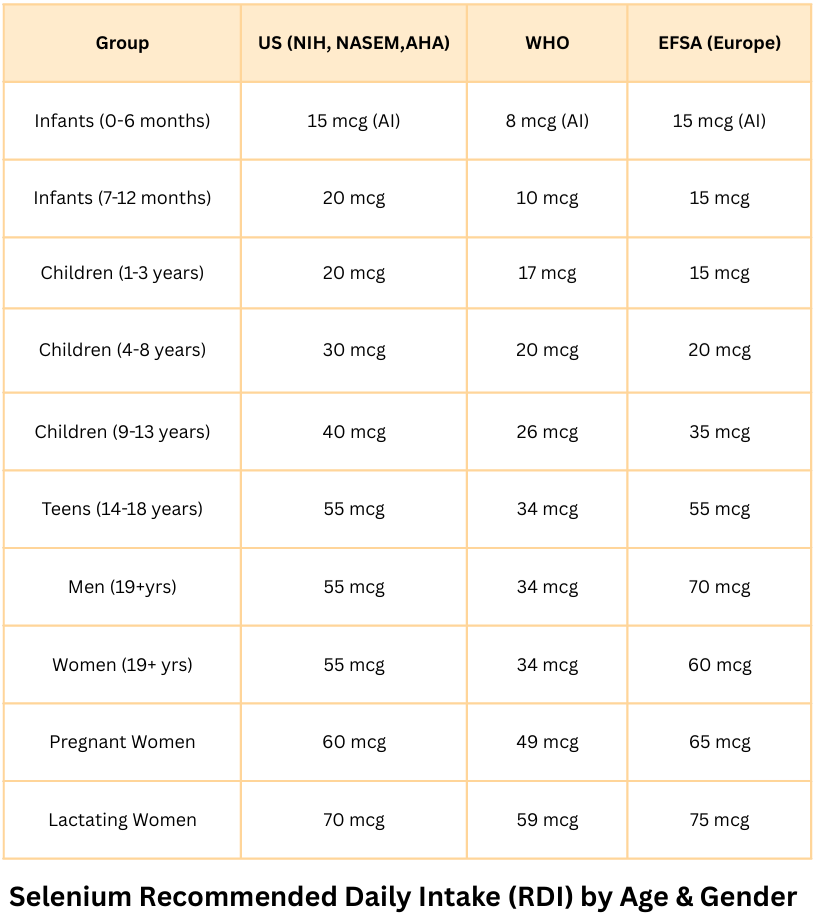
Selenium RDI Chart: How Much Do You Really Need?
Understanding the recommended daily intake (RDI) of selenium is key to getting the right amount—enough to support thyroid health, immune defense, and antioxidant function, without risking excess. Below is a comparison of selenium RDI values from major health authorities including the NIH (USA), WHO, and EFSA (Europe), showing how your needs vary by age, gender, and life stage such as pregnancy or breastfeeding.
🚨 Too Much of a Good Thing?
Taking selenium in large doses (above 400 mcg/day) over time can lead to selenosis, which causes nausea, fatigue, garlic-like breath, and even nerve damage
💊 Should You Take a Selenium Supplement?
Food should always come first. But you might consider a supplement if you:
-
Have a diagnosed thyroid autoimmune condition
-
Follow a low-selenium diet (e.g., strict veganism)
-
Are facing fertility challenges
-
Experience high oxidative stress (e.g., athletes, chronic illness)
✅ Best Forms of Selenium:
-
Selenium methionine: organic, well-absorbed
-
Sodium selenite: common in multivitamins, slightly less bioavailable
🔗 Bonus Tip:
Pair selenium with vitamin E—they work together to amplify antioxidant protection.
FAQ’s
1: What Are the Symptoms of Selenium Deficiency?
Selenium deficiency can quietly impair several critical systems in the body, particularly the immune, endocrine, and cardiovascular systems. While it’s rare in developed countries, certain groups (such as those with gastrointestinal disorders, people on dialysis, or individuals with low dietary intake) may be at risk.
Common symptoms include:
-
Fatigue & mental fog
Selenium plays a role in thyroid hormone conversion, and low levels can lead to hypothyroid-like symptoms such as tiredness, brain fog, and depression. -
Weakened immunity
Low selenium reduces white blood cell activity, increasing vulnerability to infections. -
Muscle weakness or pain
Selenium helps prevent cellular oxidative damage. Deficiency can impair muscle function. -
Hair thinning & brittle nails
Selenium supports keratin production, and low levels may cause hair and nail changes. -
Infertility or miscarriage
Inadequate selenium may impact reproductive health in both men and women.
Research Insight: The World Health Organization (WHO) notes that selenium deficiency is associated with endemic diseases like Keshan disease (a cardiomyopathy) and Kashin-Beck disease (an osteoarthropathy), especially in selenium-poor regions of China and parts of Europe.
2: Can Selenium Help Prevent Cancer?
Selenium has been extensively researched for its potential role in cancer prevention, thanks to its antioxidant properties and its influence on DNA repair, apoptosis (programmed cell death), and immune surveillance.
Highlights from research:
-
Selenium reduces oxidative DNA damage, which is a key trigger for cancer development.
-
Supports immune activity that may suppress tumor growth and metastasis.
-
May aid in detoxifying carcinogenic substances like heavy metals and environmental toxins.
Study Reference: The Nutritional Prevention of Cancer (NPC) Trial, published in JAMA, showed that selenium supplementation (200 mcg/day) significantly reduced the risk of prostate, lung, and colorectal cancers in individuals with low baseline selenium levels.
⚠️ Caution: Not all studies are conclusive. The SELECT trial (2009) found no protective effect from selenium in prostate cancer when used alongside vitamin E.
Bottom Line: Selenium may help prevent certain cancers, particularly in people with low selenium status, but it’s not a substitute for screening, lifestyle, or medical treatments.
3: How Much Selenium Is Too Much? (Toxicity Risks)
While selenium is essential, it can be toxic in high doses—a condition called selenosis.
Symptoms of Selenium Toxicity (when intake >400 mcg/day regularly):
-
Nausea, vomiting
-
Hair loss
-
Skin rashes
-
Irritability and fatigue
-
Garlic breath odor
-
Nail brittleness and discoloration
-
In severe cases: nervous system abnormalities or liver damage
Upper Limit (UL):
The National Institutes of Health (NIH) sets the tolerable upper intake level (UL) for selenium at 400 mcg/day for adults.
Avoid selenium mega-doses unless under medical supervision. Stick to dietary sources or low-dose supplements if needed.
4: What are the Best Plant-Based Sources of Selenium?
Though animal products like fish, eggs, and meats are richer in selenium, plant-based sources can also help meet daily needs—especially when grown in selenium-rich soils.
Top plant-based selenium foods:
| Food | Selenium (mcg per 100g) |
|---|---|
| Brazil nuts (1 nut = ~90 mcg) | 1900 mcg (very high!) |
| Sunflower seeds | ~79 mcg |
| Brown rice (cooked) | ~15 mcg |
| Spinach (cooked) | ~11 mcg |
| Whole wheat bread | ~10 mcg |
| Lentils | ~6 mcg |
Tip: Soil selenium levels vary. Brazil nuts from Bolivia tend to have lower selenium than those from Brazil.
📝 Pro Tip: If you’re vegan or vegetarian, regularly consume 1–2 Brazil nuts daily—enough to meet or exceed the RDA of 55 mcg/day.
5: Does Selenium Improve Male Fertility and Sperm Health?
Yes. Selenium is crucial for male reproductive health, particularly in sperm development and function.
How it helps:
-
Protects sperm from oxidative damage
Selenium is a component of glutathione peroxidase, which protects sperm cells from ROS (reactive oxygen species). -
Supports sperm motility
Low selenium has been linked to reduced sperm movement and abnormal morphology. -
May improve testosterone production
Selenium interacts with enzymes involved in steroidogenesis (testosterone synthesis).
Study: A 2011 meta-analysis in Biological Trace Element Research found that selenium supplementation improved sperm motility and concentration, particularly in men with infertility.
💡 Tip for men trying to conceive: Pair selenium with zinc, vitamin E, and CoQ10 for synergistic support.