Introduction
” Feeling exhausted despite sleeping 8 + hours? Forgetting names mid – conversation? You could be experiencing the seven warning signs of vitamin B-12 deficiency you should never ignore- — a condition so serious that it can mimic dementia, depression, and chronic fatigue.
Unlike other vitamins, vitamin B-12 isn’t naturally found in plants. It’s produced by bacteria and must come from animal products or supplements. Ignoring early B-12 deficiency symptoms can lead to irreversible nerve damage, making it crucial to recognize the key signs of low vitamin B-12 before it is too late.”
Yet, studies show:
-
50% of vegans lack adequate B12 [Am J Clin Nutr]
Let’s uncover the 7 silent warning signs before permanent damage occurs.”
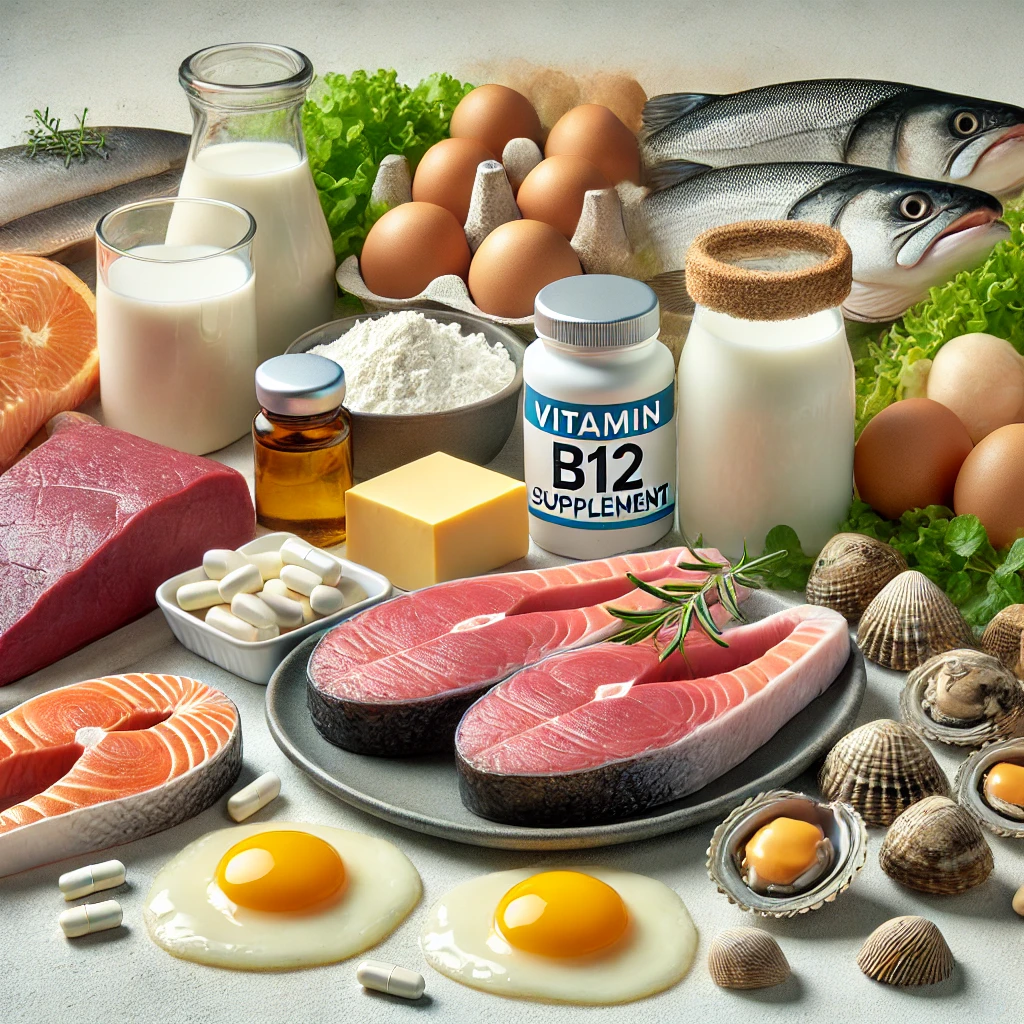
Why Vitamin B12 Matters
B12 isn’t just an energy booster—it’s your body’s electrician, delivery driver, and repair crew all in one:
-
🔋 Powers every cell by helping convert food into energy.
-
🚚 Delivers oxygen via healthy red blood cells (no B12 = anemia).
-
🔧 Repairs nerves by maintaining their protective coating (myelin).
Fun fact: Your liver stores 3–5 years’ worth of B12. But once reserves deplete, symptoms hit hard.
Common Symptoms of Vitamin B12 Deficiency
What makes vitamin B12 unique- and dangerously easy to miss – is that it’s only found in animal products. Vegetarians, vegans, and even meat eaters with absorption issues can develop deficiency that mimic serious neurological disorders. The critical science your body lacks vitamin B-12 often appears gradually, making them easy to dismiss until significant damage occurs. But here’s what most people don’t realize: catching these warning signals early could mean the difference between temporary symptoms and permanent nerve damage.
1. Crushing Fatigue That Sleep Won’t Fix
What it feels like:
-
Waking up exhausted despite 8+ hours of sleep
-
Needing multiple coffees just to function
-
Heavy limbs (e.g., “Walking feels like wading through cement”)
Why it happens:
B12 is essential for converting food into ATP (cellular energy). Low B12 = sluggish metabolism.
🔬 Study: B12-deficient patients reported 2.5x more fatigue than controls (Journal of Clinical Medicine, 2019).
💡 Action step: Get tested if fatigue persists >2 weeks, especially with other symptoms below.
2. Pins & Needles or “Electric Shock” Sensations
What it feels like:
-
Tingling in hands/feet (like when a limb “falls asleep”)
-
Sudden zaps or burning sensations
-
Numbness in patches (e.g., can’t feel a phone vibrating in your pocket)
Why it happens:
B12 maintains the myelin sheath—the protective coating around nerves. Damage causes misfiring.
⚠️ Warning: Long-term deficiency can cause permanent nerve damage.
💡 Action step: Try pressing a dull pencil against your skin. If you can’t feel pressure evenly, see a doctor.
3. Memory Slips & “Brain Fog”
Real-life examples:
-
Forgetting why you walked into a room
-
Mixing up words (e.g., calling your dog by your kid’s name)
-
Struggling to focus during meetings
Why it happens:
Low B12 shrinks brain volume and disrupts neurotransmitter production.
🔬 Harvard Study: Seniors with B12 deficiency had smaller brains and 4x higher Alzheimer’s risk.
💡 Action step: Keep a “brain blunder” journal. If incidents increase, test B12 levels.
4. Shortness of Breath & Dizziness
What it feels like:
-
Getting winded climbing stairs
-
Heart racing unexpectedly
-
Seeing spots when standing up
Why it happens:
B12 deficiency causes megaloblastic anemia—abnormally large red blood cells can’t carry oxygen well.
🩺 Doctor’s clue: Pale skin + yellowish tinge (from broken-down RBCs) = classic signs.
💡 Action step: Check your eyelids. If the inner rim looks white (not pink), ask for a CBC test.
5. Mood Swings or Unexplained Depression
What it feels like:
-
Crying over minor irritations
-
Feeling “numb” or disconnected
-
Sudden anger outbursts
Why it happens:
B12 is needed to produce serotonin and dopamine. Deficiency mimics depression.
🔬 BMC Psychiatry Study: 50% of depressed patients improved with B12 supplements.
💡 Action step: If antidepressants aren’t working, request a B12 test.
6. Blurred Vision or Light Sensitivity
What it feels like:
-
Needing brighter light to read
-
Colors seeming “washed out”
-
Eye pain in fluorescent lighting
Why it happens:
Optic nerve damage (B12 neuropathy) disrupts visual signals.
👁️ Ophthalmologist tip: Sudden vision changes + B12 deficiency = medical emergency.
💡 Action step: Cover one eye at a time. If one eye sees significantly worse, seek help ASAP.
7. Beefy Red Tongue & Mouth Sores
What it looks/feels like:
-
Smooth, shiny tongue (lost taste buds)
-
Canker sores that won’t heal
-
Metallic taste in mouth
Why it happens:
Rapid cell turnover in the mouth depends on B12. Deficiency = failed cell renewal.
🍴 Odd symptom: Craving ice or chewing non-food items (sign of associated iron deficiency).
💡 Action step: Take a tongue selfie. Compare to “healthy tongue” images online.2
Severe Risks of Long-Term B12 Deficiency
- Neurological Disorders → Can cause permanent nerve damage and mobility issues
- Heart Disease Risk → High homocysteine levels (due to B12 deficiency) increase stroke & heart disease risk
- Infertility & Birth Defects → B12 deficiency during pregnancy can lead to neural tube defects in babies
Next: Who is at risk of Vitamin B12 deficiency?
Who is Most at Risk of Vitamin B12 Deficiency?
High-Risk Groups:
- Vegans & Vegetarians – B12 is mainly found in animal products
- Elderly (60+ years) – Stomach acid production declines with age, affecting absorption
- People with Digestive Disorders – Crohn’s, Celiac, IBS, Gastritis hinder B12 absorption
- Pregnant & Breastfeeding Women – Higher B12 demand for fetal development
- People on Acid-Reducing Medications – PPIs & Metformin interfere with B12 absorption
Study: The American Journal of Clinical Nutrition found that 50% of vegans and 30% of vegetarians suffer from low B12 levels, making supplementation crucial.
Best Natural Sources of Vitamin B12
Since Vitamin B12 is not found in plant foods, it is essential to consume B12-rich animal products or fortified alternatives.
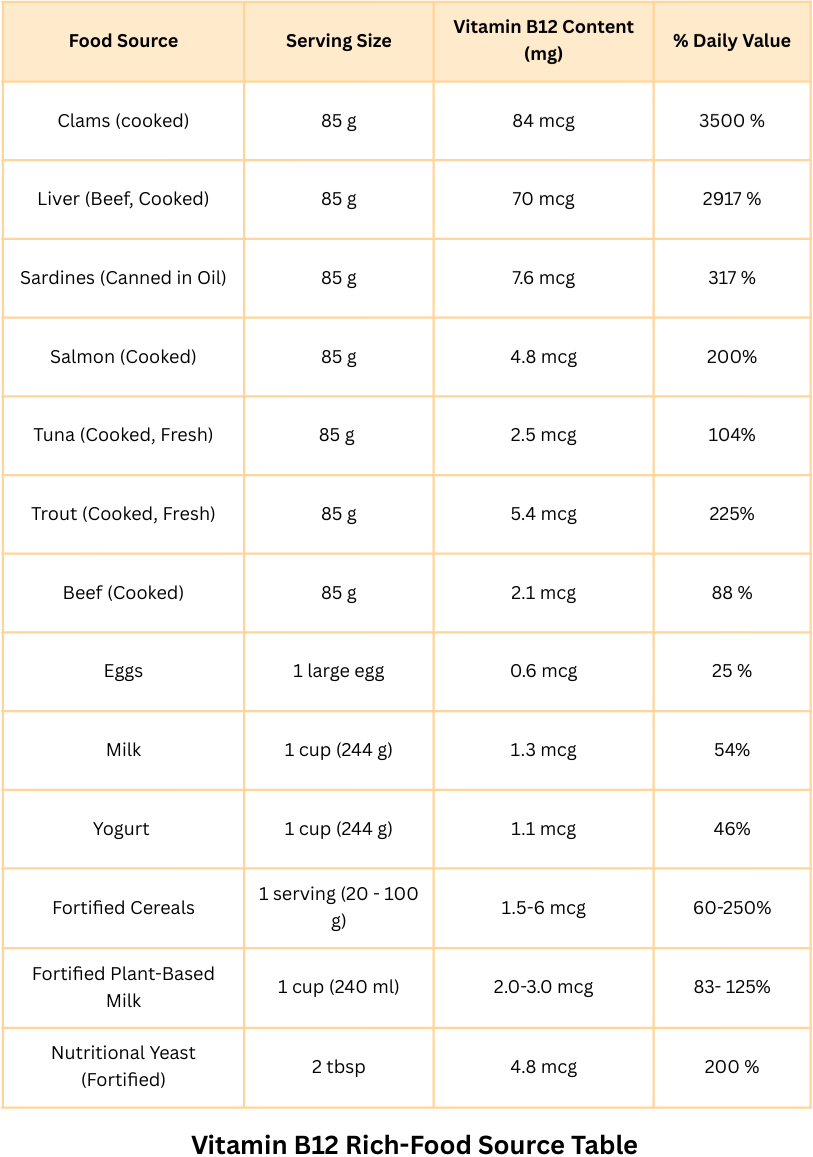
- Include B12-fortified foods (e.g., plant-based milk, cereals, nutritional yeast)
- Consider B12 supplements for optimal levels.
How to Fix Vitamin B12 Deficiency Naturally?
- Increase Dietary Intake – Consume more B12-rich foods daily
- Take B12 Supplements – Choose Methylcobalamin (better absorption) or Cyanocobalamin (longer shelf life)
- Consider B12 Injections – For severe deficiency, doctors recommend intramuscular B12 shots
- Improve Gut Health – Boost stomach acid production for better B12 absorption using probiotics & fermented foods
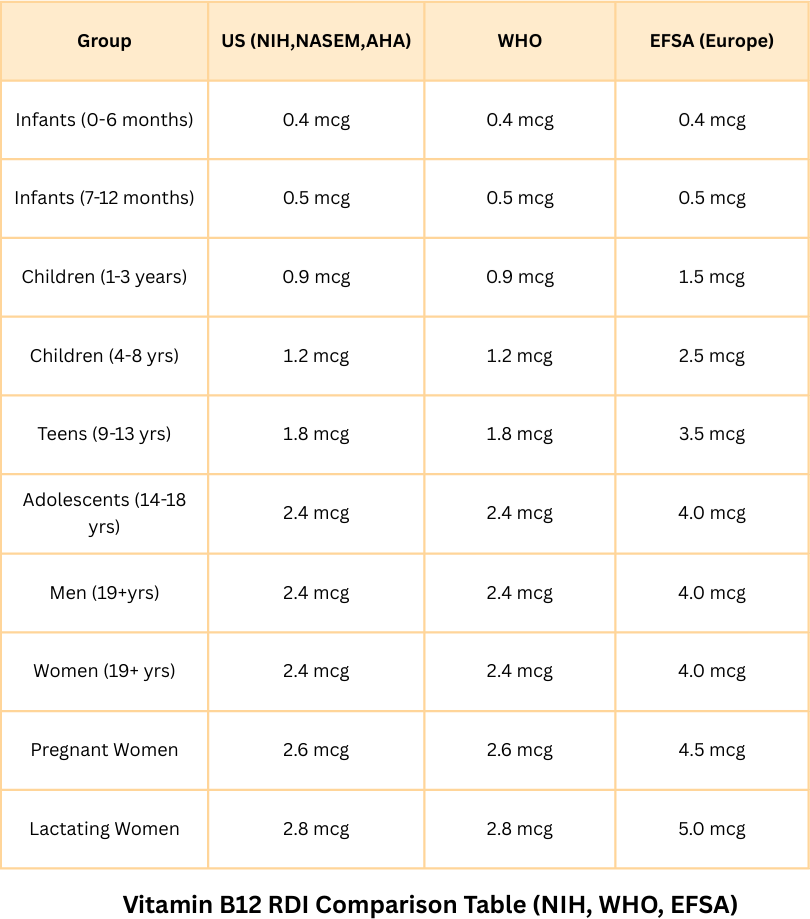
Recommended Daily Intake (RDI) for Vitamin B12 (mcg/day)
Vitamin B12 is a crucial nutrient for energy production, brain function, and red blood cell formation. It plays a key role in DNA synthesis, nerve health, and preventing anemia. Since the body does not naturally produce Vitamin B12, it must be obtained from Vitamin B12-rich foods such as meat, dairy, eggs, and fortified plant-based products, or through Vitamin B12 supplements for those at risk of deficiency.
The Recommended Daily Intake (RDI) of Vitamin B12 varies based on age, gender, and specific conditions such as pregnancy and lactation. Health authorities like the National Institutes of Health (NIH – U.S.), World Health Organization (WHO), and European Food Safety Authority (EFSA) provide different Vitamin B12 dosage recommendations to ensure optimal health, cognitive function, and metabolism support. Below is a detailed comparison of Vitamin B12 RDI values to help individuals meet their daily nutritional needs and prevent Vitamin B12 deficiency.
FAQs
Q1: Can Low B12 Cause Hair Loss?
Yes! Vitamin B12 is essential for healthy hair growth as it helps in the production of red blood cells, which deliver oxygen and nutrients to hair follicles.
How B12 Deficiency Affects Hair:
- Poor oxygen supply to the scalp leads to weakened hair follicles.
- Increased shedding and thinning hair occur over time.
- Hair strands become brittle, dull, and prone to breakage.
How to Reverse B12-Related Hair Loss?
- Increase B12 intake through diet (eggs, dairy, fish) or fortified foods (nutritional yeast, plant-based milk).
- Consider B12 supplements (Methylcobalamin for better absorption).
- Maintain good scalp health with a nutrient-rich diet.
Study: A 2018 study in the Journal of Dermatology found that women with low B12 levels had a 3x higher risk of hair loss compared to those with normal levels.
Q2: How Long Does It Take to Fix B12 Deficiency?
The recovery time depends on the severity of deficiency and method of treatment.
Recovery Timeline:
- Mild Deficiency → 3-6 months with dietary improvements & oral supplements.
- Moderate Deficiency → 1-3 months with higher B12 supplementation (1000 mcg daily).
- Severe Deficiency (Neurological Symptoms) → B12 injections (intramuscular) for faster recovery (improvements start within a few weeks).
Study: Harvard Medical School states that most people feel noticeable improvements within 2-4 weeks of starting B12 supplementation.
Q3: Can B12 Deficiency Cause Brain Fog?
Yes! Low B12 levels impair cognitive function, leading to:
- Memory problems
- Difficulty concentrating
- Mental fatigue (brain fog)
Why?
Vitamin B12 is needed for nerve function and neurotransmitter production. Without it, brain cells struggle to function, affecting mental clarity.
Study: Research shows older adults with low B12 levels have a 50% higher risk of dementia.
How to Fix It?
- Increase B12-rich foods (salmon, eggs, dairy).
- Take B12 supplements for faster recovery.
- Improve gut health for better absorption.
Q4: Can B12 Deficiency Cause Depression & Mood Swings?
Yes! B12 plays a crucial role in mental health by regulating serotonin & dopamine levels.
Symptoms of B12-Related Depression:
- Persistent sadness & low mood
- Anxiety & mood swings
- Irritability & lack of motivation
Why?
B12 is involved in neurotransmitter synthesis, affecting mood regulation. Low levels have been linked to higher depression rates.
Study: A 2021 study in the Journal of Affective Disorders found that people with low B12 levels were 2x more likely to experience depression.
How to Fix It?
- Consume B12-rich foods daily (seafood, dairy, eggs).
- Take B12 supplements if dietary intake is insufficient.
- Maintain a healthy gut (probiotics help improve B12 absorption).
Q5: Is B12 Deficiency More Common in Vegans & Vegetarians?
Yes! Since Vitamin B12 is naturally found in animal-based foods, vegans & vegetarians are at a higher risk of deficiency.
Why Are Plant-Based Diets Low in B12?
- B12 is not found in plants (it’s made by bacteria in animal tissues).
- Most plant-based diets lack natural B12 sources.
Study: The American Journal of Clinical Nutrition found that 50% of vegans and 30% of vegetarians had low B12 levels, making supplementation crucial.
How Can Vegans Get Enough B12?
- Eat fortified foods (nutritional yeast, plant-based milk, cereals).
- Take B12 supplements (Methylcobalamin is preferred).
- Consider B12 injections if severely deficient.