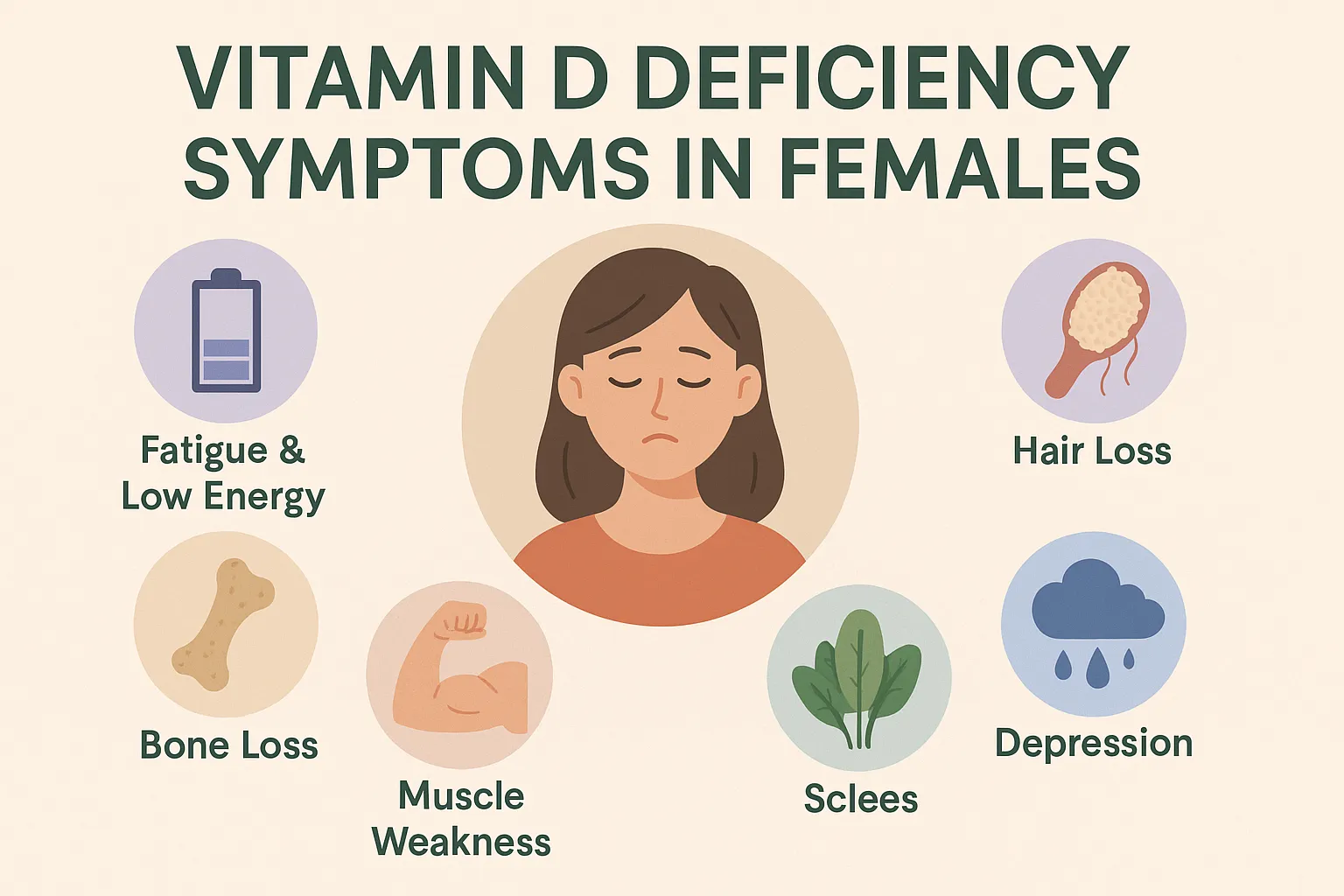
Vitamin D Deficiency Symptoms in Females: 9 Overlooked Signs Women Should Never Ignore
Vitamin D deficiency symptoms in females often go unnoticed—yet this silent deficiency can seriously impact a woman’s hormones, mood, bone health, immunity, and even fertility. Vitamin D, often called the “sunshine vitamin,” plays a crucial role in over 200 biochemical reactions, including calcium absorption, estrogen balance, and serotonin regulation. Unfortunately, studies suggest up to 70% of women globally are Vitamin D deficient—especially during pregnancy, perimenopause, and winter months.
In this article, we’ll uncover 9 subtle but critical Vitamin D deficiency symptoms in females, the science behind them, and how to fix it naturally.
Key symptoms of Vitamin D deficiency in women include fatigue, hair loss, low libido, and poor sleep.
1. Persistent Fatigue & Low Energy Levels in Women
Even after a full night’s sleep, many women report dragging energy and brain fog. This isn’t always about iron or thyroid—it may be low Vitamin D.
Study: According to a paper published in the North American Journal of Medical Sciences, women with Vitamin D levels below 20 ng/mL reported significantly higher levels of fatigue and daytime sleepiness.
Why it happens: Vitamin D is essential for mitochondrial function—your cells’ energy powerhouses. Deficiency results in poor energy production.
2. Bone Pain or Muscle Weakness Linked to Vitamin D Deficiency
Not just for bones—Vitamin D also affects muscle fibers and collagen integrity. Deficiency may cause unexplained aches, cramps, and weakness in thighs, hips, or lower back.
NIH Insight: The National Institutes of Health notes that chronic Vitamin D deficiency impairs calcium absorption, leading to soft bones (osteomalacia) and muscle weakness in adults.
3. Mood Swings, Anxiety & Depression in Females with Low Vitamin D
Vitamin D interacts with areas of the brain involved in mood regulation.
A meta-analysis in the Journal of Affective Disorders linked low Vitamin D levels with higher rates of PMS-related mood changes, anxiety, and clinical depression in women.
Especially affected: Teen girls, postpartum mothers, and perimenopausal women.
4. Frequent Infections or Poor Immunity Caused by Vitamin D Deficiency
Getting sick often—especially colds, sinus issues, or UTIs—can signal low Vitamin D.
Vitamin D activates T-cells and monocytes, essential for immune defense. The CDC notes that low Vitamin D correlates with increased respiratory tract infections in women during winter.
5. Hair Thinning or Hair Loss from Low Vitamin D
While often blamed on hormones or stress, Vitamin D plays a crucial role in the hair growth cycle.
Research in Skin Pharmacology and Physiology found that women with telogen effluvium (a common female hair shedding condition) had significantly lower Vitamin D levels.
6. Delayed Wound Healing Linked to Vitamin D Deficiency in Females
Cuts or bruises taking longer than usual to heal?
Vitamin D helps regulate inflammation and promote the growth of new skin. Deficiency may lead to prolonged wound healing, especially after surgery or injury.
7. Low Libido or Hormonal Imbalance in Women with Vitamin D Deficiency
Vitamin D receptors are found in ovaries, pituitary glands, and other hormone-producing tissues. It regulates estrogen, progesterone, and testosterone levels.
Low levels may contribute to menstrual irregularities, PCOS flare-ups, or reduced libido in women.
8. Poor Sleep Quality Due to Vitamin D Deficiency
Vitamin D helps regulate melatonin and circadian rhythms.
Studies show women with low D levels experience more sleep disturbances, shorter sleep duration, and reduced sleep efficiency.
9. Infertility or Trouble Conceiving Linked to Low Vitamin D
Vitamin D influences ovarian reserve, embryo implantation, and endometrial health.