Vitamin K2 Benefits for Bones and Arteries: 7 Science-Backed Ways It Protects Your Health
Vitamin K2 benefits for bones and arteries are often overlooked, but science reveals this mighty vitamin plays a powerful role in your long-term health. While most people are familiar with Vitamin K1 (for blood clotting), it’s Vitamin K2 that helps keep calcium in the right places—your bones and teeth—and out of the wrong places—like arteries and soft tissues.
Understand this way as most people know about calcium for bones and Vitamin D for immunity, but there’s a missing piece in this puzzle—Vitamin K2. This underrated nutrient acts like a “calcium traffic controller” in your body, ensuring calcium goes where it’s needed (bones and teeth) and stays out of where it shouldn’t (arteries and soft tissues).
If you’ve ever wondered why some people have strong bones but clogged arteries—or vice versa—Vitamin K2 could be the missing link. In this deep dive, we’ll explore 7 crucial Vitamin K2 benefits for bones and arteries, backed by science but explained in simple, relatable terms and you’ll learn how Vitamin K2 supports bone density, protects cardiovascular health, works with Vitamin D3, and why it’s especially important as we age.
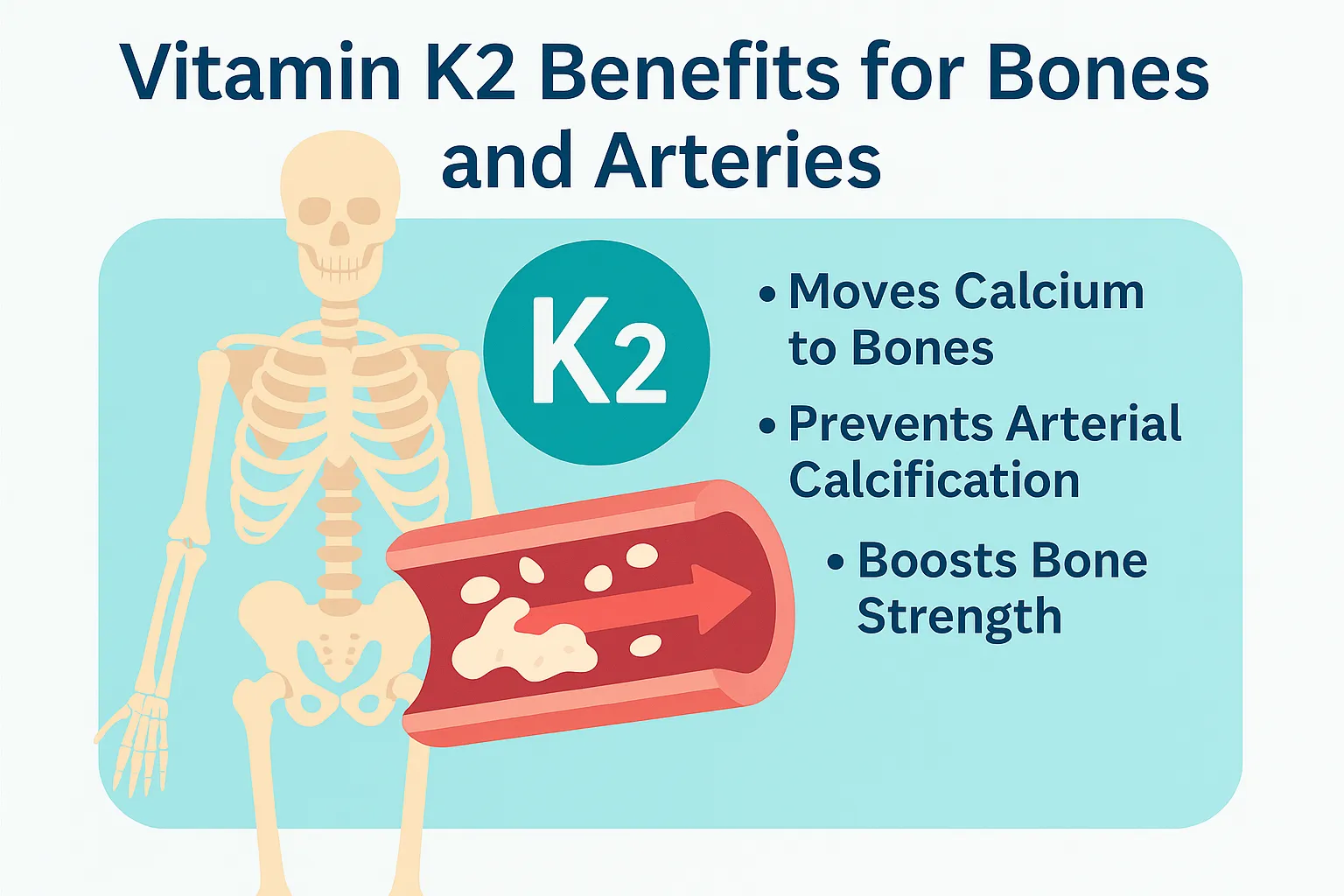
Infographic illustrating how Vitamin K2 helps move calcium to bones, prevent arterial calcification, and support heart health.
1. Prevents Arterial Calcification (Stops “Hardening of the Arteries”)
What Happens Without Enough K2?
Imagine your arteries as flexible rubber hoses. Over time, calcium can sneak into the walls, turning them into stiff, brittle pipes—a condition called
. This leads to:
-
High blood pressure (less flexible arteries = harder for blood to flow)
-
Increased heart attack risk (stiff arteries are more prone to blockages)
How Vitamin K2 Benefits for Bones and Arteries Work Together
Vitamin K2 acts like a GPS for calcium, directing it to your bones (where it strengthens structure) while keeping it out of arteries (where it causes hardening). This dual action makes K2 unique—it protects your skeleton and cardiovascular system simultaneously. Vitamin K2 activates a protein called Matrix Gla Protein (MGP), which acts like a “calcium vacuum” in your arteries, preventing dangerous deposits.
Science Says: A 10-year study in Thrombosis and Haemostasis found people with high K2 intake had 50% lower risk of arterial calcification and heart disease death.
Real-Life Example:
-
Japan’s natto eaters (fermented soy, rich in K2) have lower heart disease rates than Westerners, despite similar lifestyles.
2. Boosts Bone Mineral Density (BMD) (Especially for Aging Adults)
The Calcium Paradox
You might take calcium supplements, but without K2, that calcium might not reach your bones efficiently. If you’re taking calcium for bone health but ignoring Vitamin K2 benefits for arterial protection, you might be solving one problem while creating another
How K2 Helps
K2 activates osteocalcin, a protein that “cements” calcium into bones, improving strength and structure.
Research: A study in Osteoporosis International found postmenopausal women taking K2 had slower bone loss and fewer fractures.
Who Needs It Most?
-
Women over 50 (osteoporosis risk spikes after menopause)
-
Elderly adults (bone density naturally declines with age)
Pro Tip: To maximize Vitamin K2 benefits for bones and arteries, pair 100–200 mcg of MK-7 with Vitamin D3 daily. pairing K2 with Vitamin D3 (helps absorb calcium) and magnesium (aids bone remodeling).
3. Works Synergistically with Vitamin D3 (They’re a Power Couple)
The Problem with Taking D3 Alone
Vitamin D helps your gut absorb calcium—but without K2, that calcium can float around and deposit in soft tissues (like arteries).
How K2 Fixes This
K2 directs calcium into bones and teeth while keeping it out of arteries.
Key Study: Research published in the Journal of Vascular Health showed that combining vitamin D3 with K2 improved arterial elasticity twice as effectively as taking D3 alone within just 8 weeks.
Supplement Tip: Always choose D3 + K2 supplements (look for MK-7 form of K2).
4. Reduces Fracture Risk (Up to 80% in Some Studies!)
Why Bones Get Brittle with Age
Unlike other nutrients, the dual-action Vitamin K2 benefits for arterial flexibility and bone density make it unique for aging adults. As we age, bones lose minerals faster than they rebuild—leading to osteoporosis and fractures. After age 40, prioritizing Vitamin K2 benefits for bones and arteries becomes critical—studies show deficiency accelerates both osteoporosis and heart disease risk
K2’s Role in Bone Strength
-
Improves bone geometry (makes bones more impact-resistant)
-
Reduces hip & spine fractures (most dangerous for seniors)
Japanese Study: Elderly patients taking K2 (MK-4) had 80% fewer fractures than the placebo group.
A landmark study in Osteoporosis International found that postmenopausal women taking vitamin K2 (MK-4) for three years experienced an 81% reduction in fractures compared to placebo groups.
Who Should Take K2?
-
Postmenopausal women
-
Men over 60
-
Anyone with a family history of osteoporosis
5. Supports Dental Health (Stronger Teeth & Fewer Cavities)
The Tooth-Bone Connection
Your teeth are living structures that constantly remodel—just like bones.
How K2 Helps Teeth
-
Stimulates dentin growth (the layer under enamel)
-
May help reverse early cavities (emerging research)
Dental Study: Emerging research suggests vitamin K2 may help repair early tooth decay by stimulating dentin growth, according to a 2021 hypothesis in Medical Hypotheses.
Best Food Source for Teeth: Grass-fed butter (contains K2 MK-4, linked to oral health).
6. Improves Artery Flexibility (Key for Heart Health)
Magnesium and calcium get more attention, but Vitamin K2 benefits for long-term mobility and heart health are equally critical.
Why Stiff Arteries Are Dangerous
-
Higher blood pressure
-
Greater heart attack & stroke risk
Vitamin K2 Benefits for Arteries: Preventing Dangerous Calcification
Without K2, calcium can build up in artery walls like rust in pipes, increasing heart disease risk. K2’s activation of Matrix Gla Protein keeps arteries flexible, reducing blood pressure and protecting against cardiovascular events.
-
Reduces arterial stiffness (measured by pulse wave velocity)
-
Lowers heart disease risk by 57% (Rotterdam Study)
Real-Life Impact:
-
Mediterranean diets (rich in K2 cheeses) link to better heart health.
7. Protects Against Osteoporosis AND Heart Disease at Once
The Unique Dual Benefit of K2
Most nutrients help either bones or heart—but K2 does both:
✅ Strengthens bones (via osteocalcin)
✅ Cleans arteries (via Matrix Gla Protein)
Who Needs Vitamin K2 Benefits for Bones and Arteries Most?
If you’re over 50, take calcium/Vitamin D, or have a family history of osteoporosis/heart disease, K2 is crucial. It’s especially vital for postmenopausal women and aging men, as natural K2 production declines with age. While Vitamin K1 supports blood clotting, only Vitamin K2 benefits include simultaneous protection against osteoporosis and atherosclerosis.
-
Aging adults (bone + artery decline accelerates after 50)
-
People with family history of heart disease or osteoporosis
🔬 MK-4 vs. MK-7: Which K2 Should You Take?
| Form | Found In | Duration in Body | Best For |
|---|---|---|---|
| MK-4 | Animal foods (egg yolks, butter) | Short-acting (hours) | Dental health |
| MK-7 | Fermented foods (natto, cheese) | Long-lasting (days) | Bone & heart health |
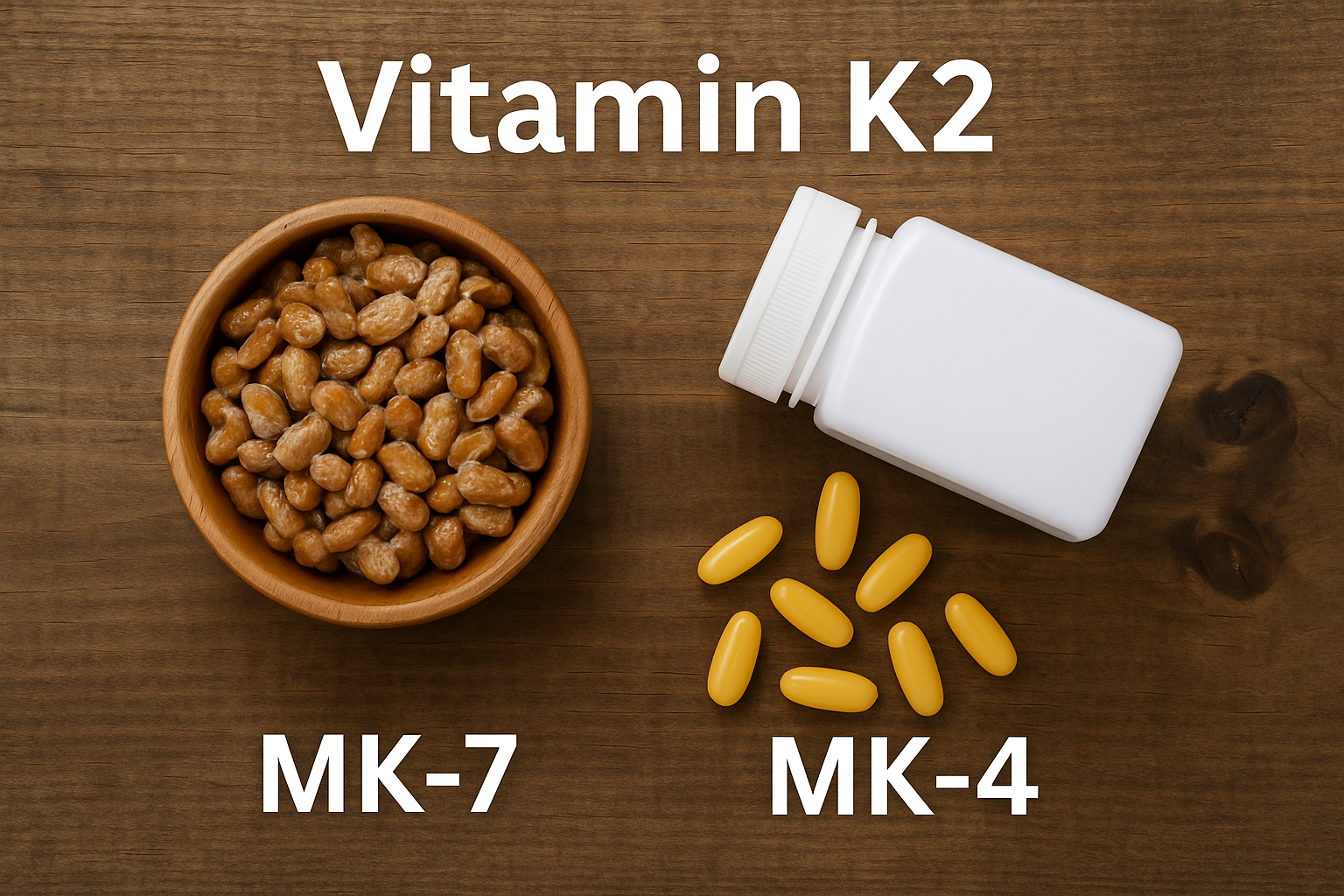
Supplement Tip: MK-7 (100–200 mcg/day) is best for most people.
Now that you understand the life-changing Vitamin K2 benefits for bones and arteries, the question isn’t if you should take it—but which form (MK-7 or MK-4) fits your needs.
A 2019 Nutrients journal review confirmed that MK-7 (from fermented foods) has a longer-lasting effect in the body compared to MK-4 (from animal sources), making it ideal for sustained benefits.
🥑 Best Food Sources of Vitamin K2
| Food | K2 Form | Serving | Amount (mcg) |
|---|---|---|---|
| Natto (fermented soy) | MK-7 | 1 tbsp | 800–1000 |
| Gouda cheese | MK-7 | 1 oz | 75–100 |
| Egg yolks (pasture-raised) | MK-4 | 1 large | 30 |
| Grass-fed butter | MK-4 | 1 tbsp | 15 |
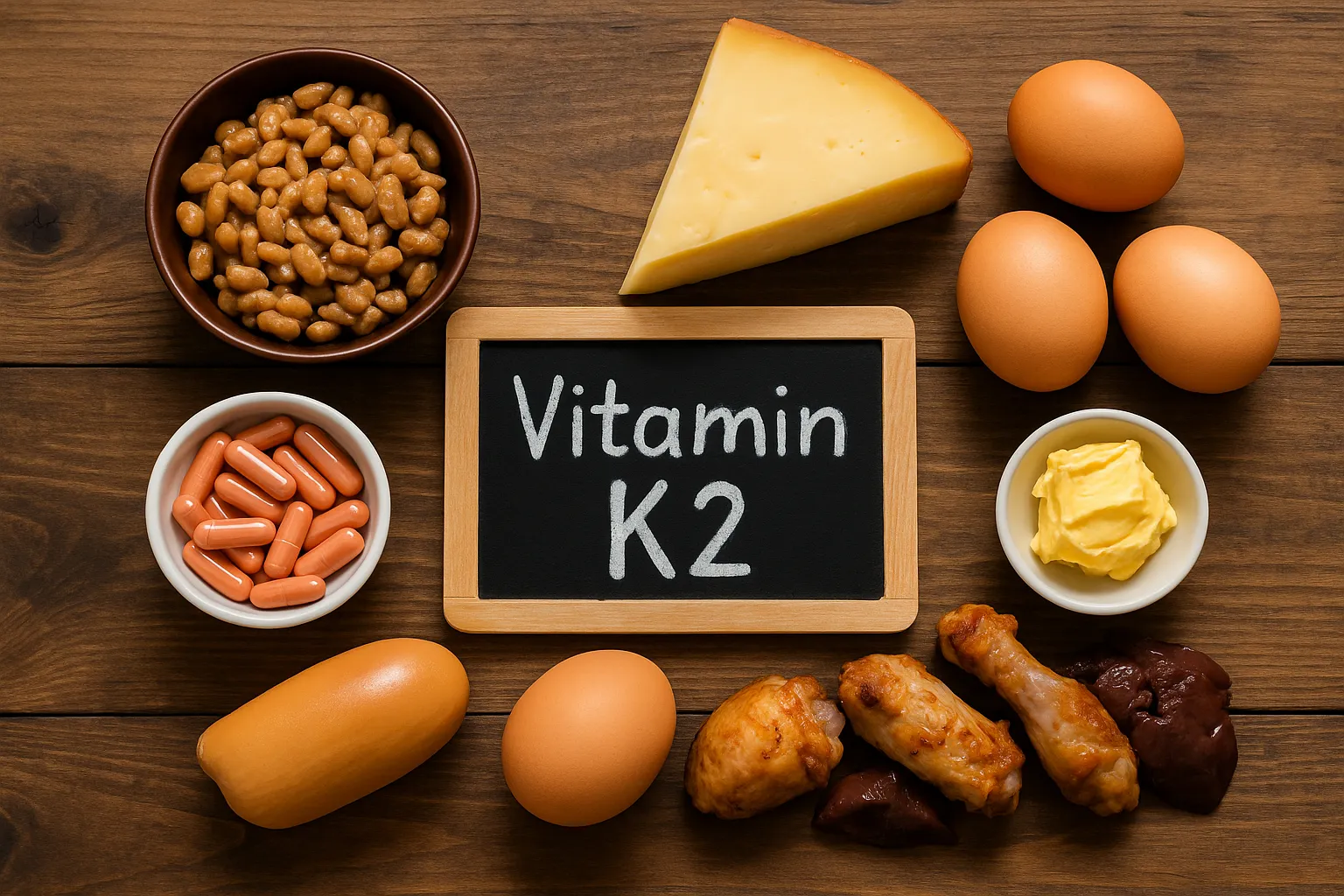
While fermented foods like natto deliver natural Vitamin K2 benefits for bones and arteries, most Westerners need supplements to reach therapeutic doses.
Reality Check: Most people don’t eat enough K2-rich foods—supplements help!
How Long Before You Notice Vitamin K2 Benefits for Bones and Arteries?
Clinical studies confirm that Vitamin K2 benefits for bones and arteries are most pronounced when taken consistently for 3+ months.
You’ll typically start seeing Vitamin K2’s benefits within 3–6 months of consistent use, but timing varies by health goal:
-
For arterial health: Studies show improved artery flexibility within 2–4 months (measured by pulse wave velocity).
-
For bone density: Significant changes appear after 6–12 months, as bone remodeling is slower.
-
For fracture prevention: Research on elderly patients showed 80% fewer fractures after 1–2 years of K2 (MK-4) supplementation.
Why the wait? K2 works at the cellular level to activate proteins like osteocalcin and MGP—this biological “repair work” takes time. For best results:
- Take 100–200 mcg/day of MK-7 (the long-acting form)
- Pair with Vitamin D3 for better calcium absorption
- Be consistent—K2 builds benefits cumulatively
🧠 FAQs: Quick Answers to Your K2 Questions
Q: Can You Get Enough Vitamin K2 Benefits for Bones and Arteries from Diet Alone?
A: Possible, but tough unless you eat natto or aged cheeses daily. Supplements ensure optimal levels.
Q: How much K2 should I take daily?
A: 100–200 mcg of MK-7 is ideal for bones and arteries.
Q: Does K2 interact with blood thinners?
A: Yes—if you’re on warfarin, consult your doctor before supplementing.
Final Thought: If you care about long-term mobility and heart health, Vitamin K2 is a must-have nutrient—especially after 40.
Ready to try K2? Your bones (and heart) will thank you! 💙